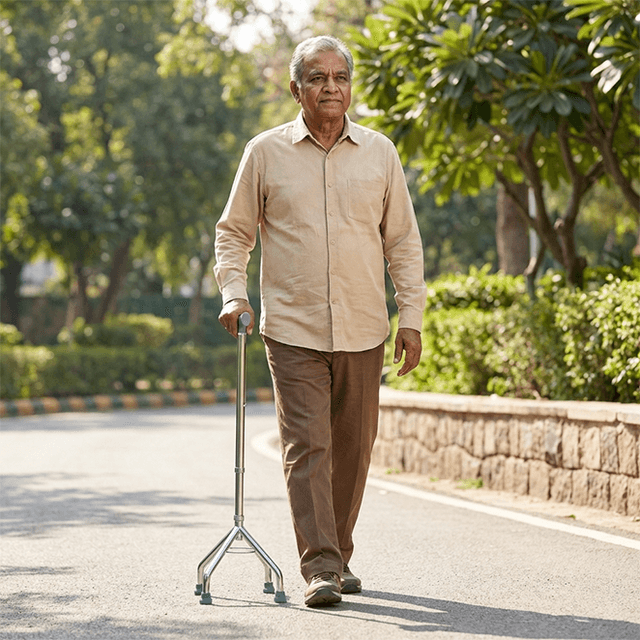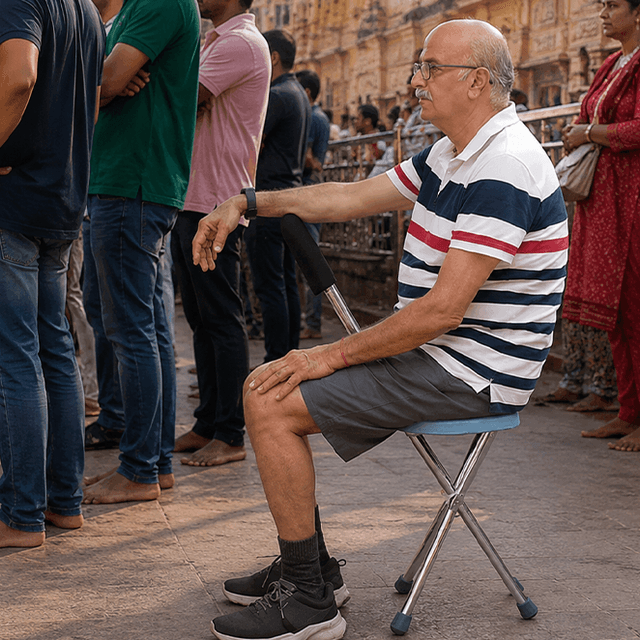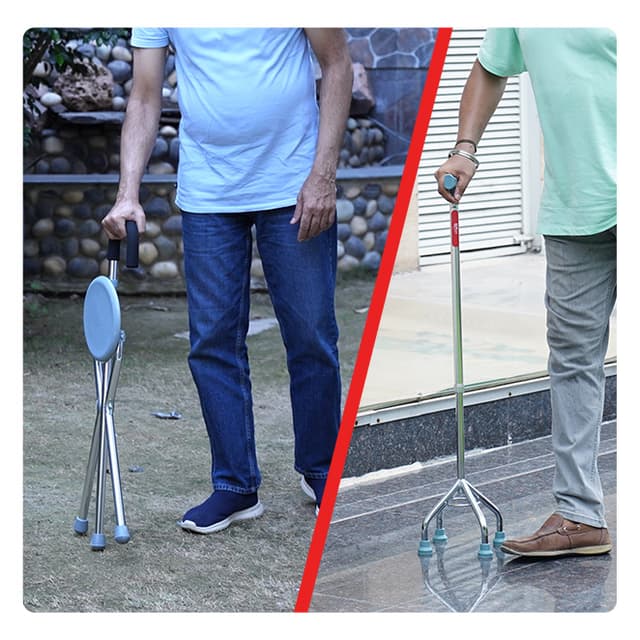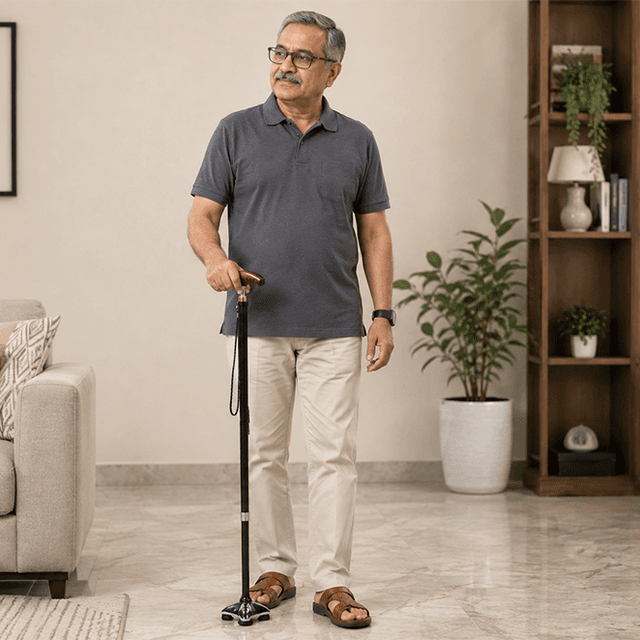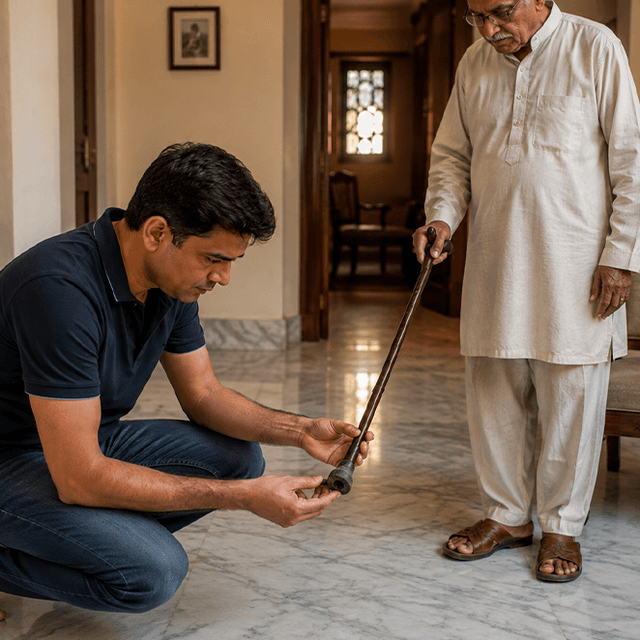


Choosing a Wooden Walking Stick in India: Bamboo, Cane & Traditional Wood
Article by: Nandini
Article Category: Walking Sticks
Aug 10, 2026
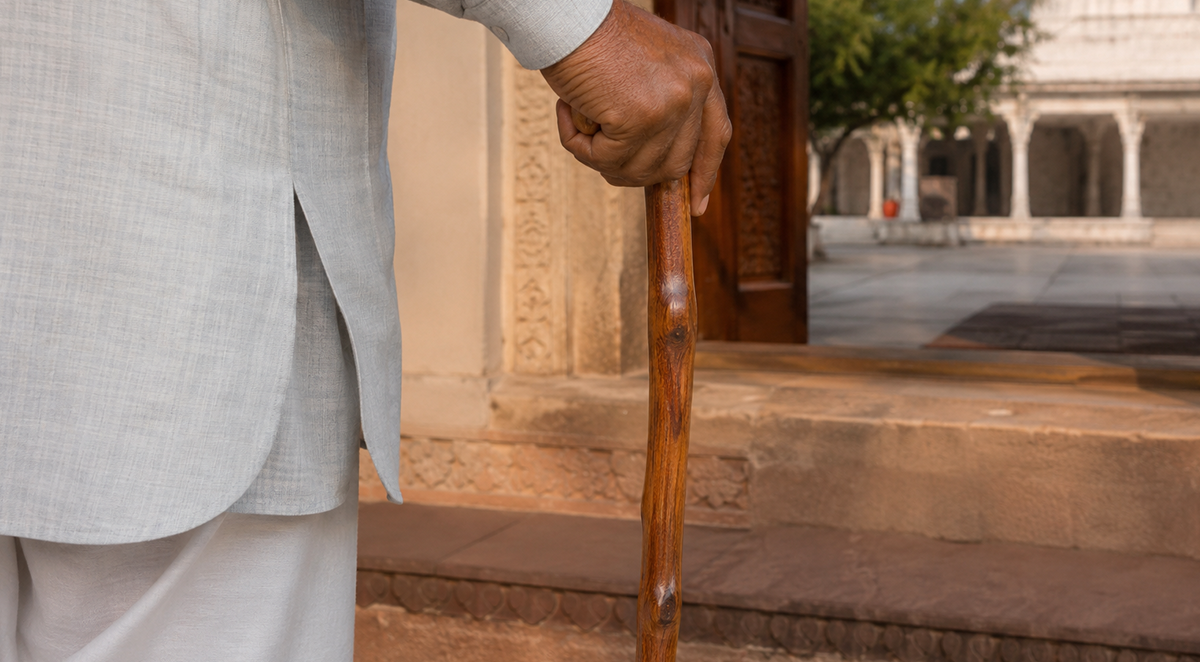
A walking stick is supposed to catch you when you need it. Instead, too often it does the opposite.
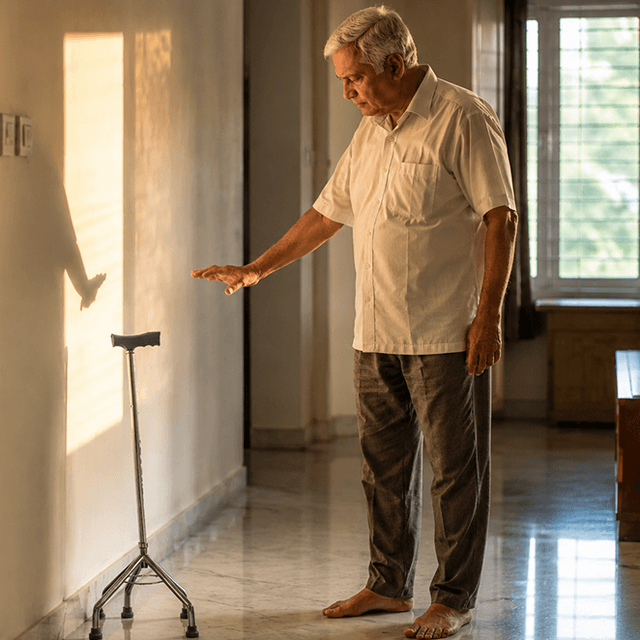
You lean on it, and your shoulder hikes up. Your back curves. Your next step feels a little off. Most people just assume they'll adjust to it over time but the truth is, your body never really does.
The common belief is that as long as the stick reaches the ground, it will do the job. This is not true. When you get the height of the stick wrong it causes your posture to go out of alignment. If the stick is too tall you will overreach with every step. If it is too short you will have to hunch forward, which will put strain on your lower back.
The difference between walking with confidence and walking toward a fall is often only a couple centimeters.
Finding the right stick is about more than just picking one off the shelf. It is about ensuring the walking stick is the right height, keeping your posture natural, and fitting your body so every step feels sturdy again.
The good news is that finding the right height will only take a couple minutes of your time. However, those couple minutes will make a huge difference. When done correctly, a walking stick will help ease strain on your joints, improve your stability, and lower your chances of falling. Beyond physical support, a walking stick provides a sense of confidence in mobility.
If you are getting a walking stick for yourself or are helping a parent or loved one get a walking stick, this guide will give you step by step instructions on how to measure the right height, how to adjust it correctly and identify the signs that show the walking stick may be doing more harm than good.
Why Height Is the Whole Game
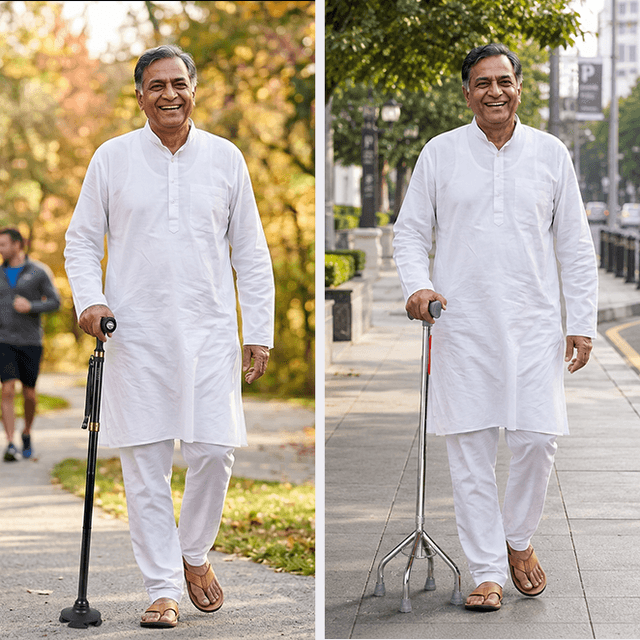
The main purpose of a walking stick is to provide support to your weaker side, and give you a third point of contact with the ground. A walking stick can only do this if it is the right height. If it's set too high, your elbow will be sharply bent, forcing you to push your shoulder up with every step. If the stick is set too low, you will be forced to bend forward to reach down to the stick. This will cause you to curve your spine and put additional strain on your lower back as well as your knees.
The cumulative effects of an ill-fitting walking stick can be severe. Over weeks, a walking stick that is not the correct height can reshape the way you walk, and this is particularly dangerous as it significantly increases the chance of falling.
How to Measure the Correct Walking Stick Height
Determining the appropriate height for a walking stick can be achieved easily without any special tools. The following two methods can be used, and you can use both for accuracy.
- The wrist-crease method: Stand straight with arms relaxed and down at your side. Make sure you are wearing the kind of shoes you would be wearing when walking using the stick. Look at where the crease on the inside of your wrist falls. That point measured from the floor is roughly where the top of your walking stick handle should sit.
- The elbow-bend method: Hold the stick (or have someone hold a measuring tape) at your side with the tip touching the ground about 15 cm out from your foot. When you grasp the handle, your elbow should bend comfortably 15 to 20 degrees. It should neither be locked straight nor sharply bent.
The correct height for the walking stick is where the two methods give similar results. If you are assisting a parent who is elderly, it is best to do this in the evening rather than the morning because a person's spine can compress and joints can stiffen throughout the day, naturally decreasing their height by a centimetre or two.
Indications That You Have the Incorrect Height for Your Stick
A measuring tape is not always required to sense that something is off. Look for the following:
- You lean to the side or lift your shoulder to place weight on the stick
- Your back and shoulder hurt even after short walks
- You feel like you have to hold onto the handle tighter than it feels comfortable
- You have been trying to avoid stairs, uneven ground or long walks
Each of these issues alone may not mean much. Typically, two or more indicate that it is time to measure the stick again.
Adjusting an Adjustable Walking Stick the Right Way
Most modern walking sticks, including those with adjustable height capability, have either a button-and-lock system or a twist-lock system. To adjust it, loosen the lock, and slide down to the height you measured. Make sure the stick fully clicks back into place, or fully twists back into place, before you put weight on it. If the stick is half-locked, it is a fall risk.
It is also important to check the height every few months, especially after a change in shoes. Even a change from flat shoes to shoes with a slight heel can affect your effective reach by 1 cm or more.
Choosing A Walking Stick That Fits
Height is important, but grip, base, and weight also matter when choosing a stick. If the stick is too heavy, it can tire the hand and wrist after a while. A rubber tipped stick can also lose grip if the ground is bumpy. This is where pivoting bases come in. A pivoting base can rotate 360 degrees, allowing the stick to remain in contact with the ground and adapt to slopes, tiles, or uneven pavement. A stick like the AGEasy Pivot Explorer Carbon Walking Stick is based on this concept. It is height-adjustable, ultra lightweight, and has a pivoting base. So the stick is not just about length, but how it performs when you are actually walking down real Indian streets and staircases and not some showroom floor.
Traveling With a Walking Stick
Most Indian air carriers classify a walking stick as a mobility aid, which is treated differently than normal luggage. They do not count mobility aids, including walking sticks, crutches, wheelchairs, etc, in your cabin or check-in baggage limit.
Hence, it is a good idea to declare a stick when you book your ticket as the staff at the check-in will assist you at the boarding gate. Just like other items, the stick will go through a security check, so be prepared to spend a few extra minutes at that check.
The Bigger Picture: A Stick Is Only Part of Fall Prevention
Getting the height of the walking stick adjusted correctly is a good start. But there is still the issue of understanding what is going on with the body day by day. Instances of dizziness, light-headedness, or loss of balance can be attributed to fluctuations in blood pressure. This is something older adults experience when they get up too quickly.
However, they can also miss blood pressure tests because they forget to do it regularly. A simple approach to addressing this issue is developing the habit of monitoring blood pressure at home. For example, using a wrist blood pressure monitor like AGEasy digital BP Monitor to take readings before going for a walk will help to identify the problem before it leads to a fall. A correctly measured stick, combined with regular monitoring of blood pressure, will provide coverage for all the issues related to the ground and, above all, the human body as well.
An adjustable walking stick that is set at the right height will not just support your steps but will also increase your confidence in the safety of each step that you will take.