


What's a Normal Oxygen Level? Reading a Pulse Oximeter Without Panicking
Article by: Pranjul
Jul 17, 2026. 8 min read
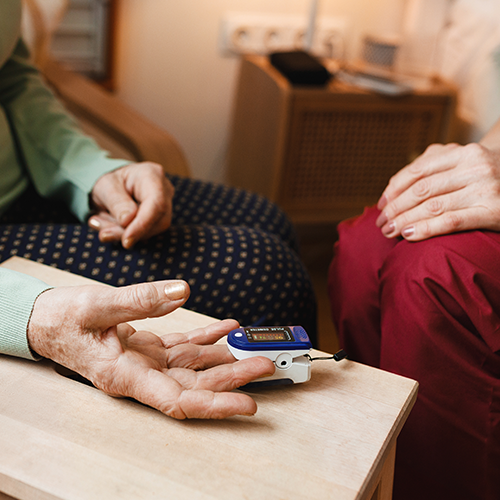
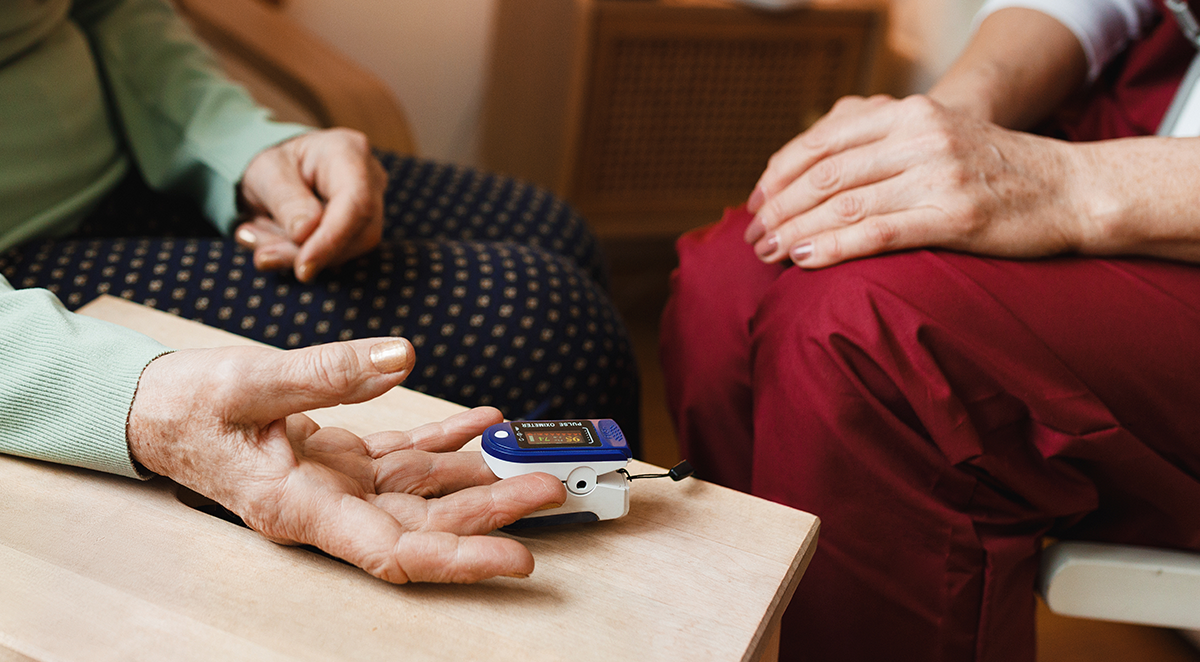
Your mum's pulse oximeter just read 92% so you think it might be a good time to head to the hospital. A couple minutes later it reads 95% and now you are wondering if we are out of the woods or if that first reading was just a fluke.
Caretakers see this confusion all the time. Using a pulse oximeter seems straightforward enough but there is a lot of guess work that goes into it. A drop on the pulse oximeter is seen as an emergency in the making for many people. People see the reading as safe and tend to think anything above a certain number is just fine. It's a normal part of the human body to have the oxygen levels shift, so there are a lot of reasons to see a change that bear no significance.
That being said, there are also reasons to seek medical attention when the oximeter reading seems fine, especially in older adults with cardiac and pulmonary issues. Once you know the normal levels for oxygen and how to take an accurate reading, along with the parameters that should cause concern, you will be able to make decisions based on information and not fear.
How Pulse Oximeters Work
A pulse oximeter determines the amount of hemoglobin in the blood that is carrying oxygen. It uses a light sensor to do this. A pulse oximeter is clipped onto the user's finger and light is shone through the finger. This is measured as a percentage and is referred to as SpO2. Additionally, current pulse oximeter devices also show the user their pulse rate. Some devices show the perfusion index, which shows how strong blood flow is at the measurement site, and displays the respective measurement.
Lung function is not evaluated by the device. Individual carbon dioxide levels, or the measurements that assess the effort someone is using to breathe are not measured. The device only provides one limited data point and as such, the number displayed is not very useful if the individual's symptoms, breathing efforts, and overall condition are ignored.
For a healthy adult, normal SpO2 level readings are between 95% and 100%. In the case of someone's wellbeing not being seriously compromised and the reading is still in the range, the number is within a range and is not an emergency. 93% to 94% warrant some attention but are not an emergency.
In contrast, the situation is different for senior patients with chronic conditions. For example, patients with lung diseases such as severe COPD, pulmonary fibrosis, or chronic heart failure only need to maintain an SpO2 level of 88% to 92% to stay healthy because their doctors have set lower targets. In such situations, the intent is not to raise blood oxygen levels because it can be dangerous. If your parent has a chronic lung or heart disease, please ask the doctor at the next visit about the expected baseline and the intervention threshold. It would be helpful to note these and display them near the oximeter.
In older individuals, the baseline oxygen levels naturally decrease with age. For instance, an 80 year old adult with no issues is likely to have lower oxygen saturation levels than a healthy 30 year old adult. An oxygen level of 94% in a senior is also not as alarming as a reading of 94% in a young adult who should ideally be reading 99%.
What Causes the Variability in Readings?
Readings are expected to naturally fluctuate over the course of the day. In seniors, an inaccurate reading can occur due to several benign reasons, such as:
- Cold Fingers: Low and poor blood circulation to the fingertip typically causes this. Take a few minutes to warm the hand again before measuring.
- Artificial Nails and Nail Polish: The sensor light is blocked by dark nail polish. Either remove the polish from one finger, or rotate the finger so the sensor is reading through the sides.
- Movement: If the sensor is confused because of hand movement, the reading will jump. This is common for elderly individuals, so the reading will jump until the hand is resting on a table. To take an accurate measurement, the hand must be absolutely still.
- Sleep and Position: Oxygen levels drop when a person is lying down or sleeping. When one first wakes up, the reading may be lower than it is after sitting up for a few minutes, which is due to the body adjusting to the oxygen levels.
- Poor Device Fit: Variability can occur due to the device being too loose or small for the person's fingers. Luckily, oximeters specifically made for older adults, like the AGEasy Advanced Sensor Pulse Oximeter, have finger size adjustability and can be activated with a single button.
- Skin Tone: Research shows that a pulse oximeter reading is likely to be inaccurate for individuals with darker skin. If the readings you take seem to be inconsistent with the person's condition, consider the symptoms and seek medical help.
How to Take an Accurate Reading
A consistent routine helps improve the accuracy of the readings. Each time do the following:
- Have the person sit and rest for five minutes.
- If their hands are cold, warm them.
- Place the oximeter on either the middle or index finger and insert the entire finger with the device facing up.
The hand must be resting on a table or in a lap so that it is at heart level and it is important that the hand remains still.
The number may take a few moments to adjust as the first reading may be lower, so please wait 30 to 60 seconds before taking the reading.
Record the level, the time, and the activity that the person did prior to the reading.
If a reading value is alarming, do not perform actions based on one reading. Adjust the device, change fingers, then when the person rests for 1 minute, take the reading again. You will have more understanding from multiple readings than from a single one.
If you record the readings over 1 or 2 weeks in a small notebook, then you will be able to establish a baseline for yourself personally. You may note that 96% was normal for your parent, as 91% was abnormal and it will be less stressful to see that during resting periods, the reading is 95% to 97%.
When to Worry
Here's when you should start getting concerned:
- Call the doctor or use the after-hours service if one without a known pulmonary issue has SpO2 less than 92%. If there are drops in the readings that remain 3 to 4 points lower than the individual's baseline
- If the individual is below the target range set by their doctor
- If along with low readings, there is chest tightness, a worsening cough, fatigue, or confusion.
Patients may provisionally be given priority for emergency treatment, despite having a normal oximeter reading, if they exhibit:
- Shortness of breath severe enough to prevent them from speaking more than a single sentence
- Shortness of breath
- Chest discomfort
- Sudden onset of confusion or unresponsiveness
The last symptom is of utmost importance. Symptoms take priority over the device. An emergency situation exists with airway obstruction with a 95% reading. The same holds for a 93% reading following a walk to the bathroom.
Managing Breathing Control at Home
For seniors with pulmonary diseases, an oximeter will be most useful as part of a larger home setup.
If home oxygen therapy has been prescribed, then the AGEasy Oxygen Concentrator 5L should be used as it has an integrated nebulizer which allows for inhaled medication administration without the need for an additional device. Home oxygen is a prescription medication; hence, it is imperative that the flow of oxygen be neither started nor adjusted as it poses a risk of providing excessive oxygen to COPD patients.
Asthma or COPD sufferers, and seniors, with chronic chest congestion may find the use of a home nebulizer for inhaled medication administration easier than using an inhaler due to the coordination required.
Daily exercises to improve lung capacity may be used as part of the treatment. To help caregivers monitor lung exercises and oxygen saturation levels (SpO2), the AGEasy lung health range includes devices, such as trainers and peak flow meters, along with other devices designed for this purpose.
Older adults may have interconnected issues with their heart and blood pressure, so if you have concerns about either, monitor those as well as levels of oxygen.
The Bottom Line
Oxygen levels of adults are usually between 95% and 100%. Seniors with chronic conditions may have levels that are considered safe though just a bit lower. A single reading can provide misleading information. Trends, baselines, and associated symptoms paint a more accurate picture. Discuss a level that would require action with a doctor. An oximeter should be used in conjunction with other tools. Documenting trends will help ease your doctor's mind. A routine can help ease your nerves.
This is NOT a medical diagnosis. See a physician or other licensed healthcare provider to discuss symptoms or to obtain a diagnosis.
You May Also Like
 No products found
Article by:

Pranjul
Article Category:
Oxygen Concentrators