

From Desk Chairs to Couches: How to Choose Ergonomic Back Support That Actually Works
Article by: Gia
Article Category: Cushions & Pillows
Aug 12, 2026


Your back is not asking for more willpower and tolerance.
It is asking for some decent support.
You move in your chair, put multiple cushions on the couch, and wake up at 2 a.m. to adjust your pillows again.
For a few moments, the discomfort gets better.
Then the discomfort is back.
People tend to think that back discomfort is something they need to just live with. But this is not the case. The issue is not really about your back. The problem is how you sit, how you lie down, and how your spine gets support, or is unsupported, hour after hour, day after day.
Unfortunately, no single pillow can help you with this.
Your office chair needs to have prevention support that actively guides your posture to the right position and not have you think about it. Your bed needs something that actively holds your spine in alignment while you sleep, not just something soft to lie on. Your couch needs to let you relax without quietly pulling your back into a shape that will make it scream at you the next morning.
Once you have the right support, your body will relax, it will heal, and it will no longer have to brace. Get it wrong, and you could be rigid by morning even after a full night's sleep.
We understand that you don't want to keep on making blind purchases, or taking chances on items that may or may not work for you. We can assist you in finding a support pillow that suits your needs. We will help you consider the various shapes, materials, and firmness levels available, so you can transform all your sitting and sleeping surfaces to help you in a supportive way instead of working against you.
Your spine should receive support from different sources.
It's important to know why your back hurts after you've been sitting or laying down for an extensive time. This is very important because it will guide your shopping efforts.
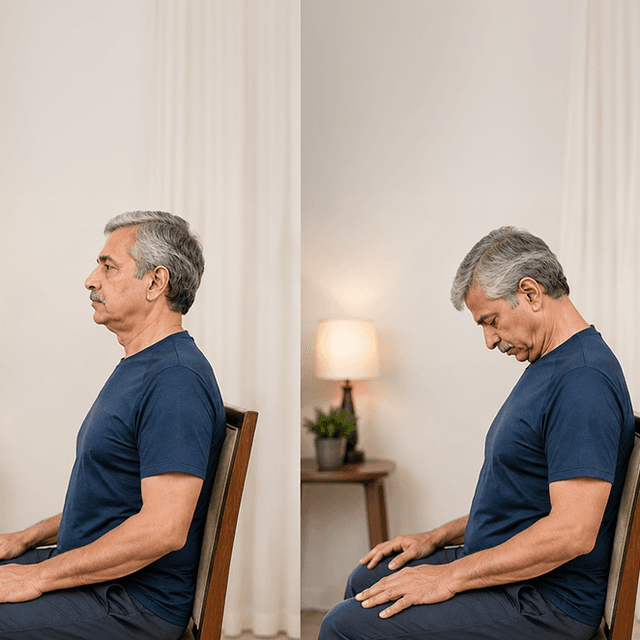
Your back's natural curve is like an 'S'. While standing, the curve is preserved easily. However, the story is different when you sit. When you sit on something soft, the curve will flatten, in what is called a pelvic posterior tilt. This will cause you to lose the natural arch of your lower back. Your upper back, instead, will round forward, and your neck will jut forward to compensate.
We use our bodies to create this posture. Even after an hour of sitting, our muscles will start becoming fatigued. After 8 hours of this, the kind of stiffness that you will feel is no joke, and you will certainly feel it come morning.
It is not until you sit straight that you will find relief. Imagine trying to move straight and do this for a prolonged period of time. This support looks different based on where you choose to sit.
Part 1: Back Support for Your Office Chair
The Drawback of Most Office Chairs
Most chairs, even the more expensive ones, have a backrest that doesn't align with your spine. They're made for the average body, but your body is not average. A 5'4" person's lumbar curve is nothing like that of a 6'1'' person that tends to slouch. The end result is that you either sit at the front edge of your seat (where the backrest does nothing) or you lean back into a support that hits you completely the wrong way. A decent lumbar support pillow solves this problem, and you don't have to spend money on a new chair.
Things to Consider for a Chair Back Support
- Shape: You want a D-shaped or a curved lumbar pillow that can fit into the hollow of your lower back. This is not meant to be a flat pad, and it should not be so round that it pushes you forward in an uncomfortable way. The objective is to use a cushion that easily fills your lower back's hollow area without any excessive pressure.
- Firmness: Your cushion should be firm enough to retain your spine's alignment, but it should not feel like an opposing wall is pressing against you. This is where high-density memory foam shines, it sinks slightly under your weight to prevent pressure points while retaining its supportive shape.
- Strap and attachments: Look for elastic, adjustable straps that anchor the pillow firmly to your chair. Because most chairs in India lack built-in lumbar support, a secure strap ensures the pillow doesn't slide down, preventing you from slouching within thirty minutes.
- Breathability: Solid foam pads can get incredibly hot during Indian summers. A breathable mesh cover is essential to increase airflow, especially if you plan on sitting for longer than 6 hours.
A Product Worth Knowing
The AGEasy Lumbar Back Support is built with high-density memory foam that relieves pressure from the spine and helps improve posture. It can be used on car seats, office chairs, and even during flights. It is a reasonable investment for 8 hour work days because it also comes with a washable cover and adjustable strap.
The product gives almost instant relief from back pain. Tight back muscles will relax as the back support is being used. It is no surprise that the back support will be used by the rest of the family.
For proper support, place the lumbar pad in the natural curve of your lower back. Avoid positioning it too high against your mid-back or too low against your tailbone. The right place is where your spine always curbs under when you are standing. For the legitimate purposes of the cushion you should fully back into the chair because if you are perching at the edge of your seat even the best of pillows won't help you.
Part 2: Back and Neck Support for Your Bed
Why Sleeping Should Not Hurt
Eight hours in bed should mean eight hours of recovery, but that is not true for most people. A stiff neck upon waking, a dull ache in the shoulder, and lower back pain that takes an hour of walking to ease are some common complaints that many people experience from faulty mattresses and wrong pillows. In most cases, a mattress that is too soft allows the spine to sink out of alignment, while an improperly suited pillow does not provide adequate support for the sleeping position. Here we will narrow it down to the pillow area.
Back Sleepers: A sleeper who gravitates to sleeping on the back should have the neck in a neutral position and should not be lifted too high by the pillow or else support will be needed from behind. A pillow designed with a contour for the cervical spine will be just right, and it will be perfect for the sleeper with the cervical spine curve. It will seamlessly maintain the natural curvature of the cervical spine.
Side Sleepers: Side sleepers need more loft because their pillows have to fill the space between the shoulder and head. If the pillow is too flat, the neck will bend down all night, but if the pillow is too high, the neck bends upward. A contoured cervical pillow with two different heights on each side gives you the flexibility to choose what works best.
Stomach Sleepers: The honest answer is to try to stop. Sleeping on your stomach turns your neck into an unnatural position to rotate for hours and puts pressure on your lower back. If breaking the habit is impossible, then use a pillow that is as thin as possible, or even none, and consider using a thin pillow under your stomach to help decrease the arch in the lower back.
What to Look for in Bed Support Pillows
- Contour Shape: A butterfly or wave-shaped contour is designed specifically to hold the cervical curve in place. For people who do not have neck pain, flat pillows are sufficient. If you do have neck pain, you need a contour.
- Memory Foam: This is the material that actually does the work. It contorts under your head and molds to the shape of your neck and holds it through the night without deflating like fiberfill does by 3am.
- Cover You Can Wash: You will want to wash it. Look for a cover that is removable and machine washable. Pillows without removable covers begin to feel dirty in a matter of weeks, especially in humid Indian summers.
- Durability: Cervical pillows made of memory foam usually need to be replaced after 18-24 months, since the foam will lose its responsiveness after that time period. It is better to spend more money on memory foam that is higher density, since the foam will hold its shape for a longer time period.
A Product Worth Knowing
The AGEasy Cervical Pillow is constructed from 100% high-density memory foam, which allows it to contour to the shape of your neck and offer support throughout the entire night. The contoured design works well for back and side sleepers, as the higher curve is for back sleepers, while the lower contour is for side sleepers. The outer sleeve can be removed and washed in a machine.
The pillow is designed specifically for seniors and adults with chronic neck pain or stiffness. It can also be useful for individuals who work long hours at a computer, as it can diminish neck pain. If neck pain is keeping you awake at night, this pillow is designed to allow your muscles to relax.
Couch Back Support
The Untold Couch Problem
Most people don't think about how their couch aggravates back problems, but it does!
You sit down to watch a show, then slide forward a bit. Your back rounds, and your head moves forward towards the screen. An hour goes by. Then two. Your lower back is in a position (flexed) that it wasn't built to be held in. When you stand up, you certainly feel the impact.
The problem with couches is that they're intentionally designed for comfort, not for good posture. Deep cushioning might feel nice for the first 10 minutes but after that it starts to work against you. A good back support cushion for your couch needs to be firm enough to counter the sink of the sofa and be versatile enough to support you if you're sitting up straight or if you're leaning back a little.
Features of Good Couch Back Support
- Firmness: A couch is soft, so you would think a soft lumbar pillow would work. You'd be wrong. You want high-density foam that keeps its shape against the sofa's gives.
- Portability: The best part of using a back support cushion is that you can take it almost anywhere! You can use it in a car, on a couch, on a chair, or even on the ground if it has a carrying strap.
- Size: Large pillows would be too large to fit on the couch, and what you want is something that would fit neatly in the small of your back without pushing you too far forward or sliding around as you shift positions.
Tailbone Exception
If couch sitting causes specific pain at the base of your spine, then a lumbar pillow alone won't help. What you need is a coccyx cushion. A coccyx cushion is designed to relieve tailbone pain, especially during long sitting hours and that means that most evenings on the couch would fit the bill. This is different from a back support and works best placed under you, not behind you.
A coccyx cushion also works as a seat cushion and has a U-shaped cutout that takes pressure off the tailbone entirely.
Quick Reference: Selecting the Right Pillow
| Situation | What You Need | Key Features to Look For |
|---|---|---|
| Office chair, extended working hours | Strap lumbar support | Adjustable attachment, memory foam and breathable cover |
| Traveling by car or plane | Portable lumbar support | Portability and strap |
| Morning neck pain | Cervical pillow | Contoured shape and 100% memory foam |
| Sleeping on your back | Cervical pillow | Higher center loft for neck curve |
| Sleeping on your side | Cervical pillow | Two-height contour design |
| Evening couch sitting | Lumbar support | High-density foam to counteract the sinking of the sofa |
| Sitting tailbone pain | Coccyx cushion | U-shaped cutout for pressure relief |
| Post-surgery or recovery | Wedge pillow | Elevation and upper body positioning |
Material Guide: What's Inside Your Pillow
The material inside of your pillow is more important than most people realize. The feelings a pillow gives on day one are mostly impacted by the outside of the pillow. But how the pillow performs after months of use is impacted by materials inside the pillow.
Memory foam is considered to be of the highest quality standard for back support pillows. It responds to your body heat, compresses when pressure is applied and springs back when pressure is removed. High-density memory foam (4+ lb/cu ft) will hold its shape for years and takes longer to flatten than lower density pillows. So when a product says "memory foam", it is always best to ask how dense.
Regular polyfoam is cheaper and commonly found in basic cushions. While it is ok for light use, it bottoms out quickly. After a few weeks, you will be sitting on nothing.
Fiberfill is the fluffy material inside typical pillows. It has no place in back support products as it compresses almost all the way down in a few minutes, resulting in no support. It's comfort, not support.
Gel-infused foam is memory foam that has cooling gel particles or channels built in. If you tend to run warm or live in a hotter climate, it might be worth considering, though mesh covers that are breathable do cool at a lower price point.
Latex foam is a natural alternative to memory foam. It is also more expensive and not as common in India, but it is an option if you want something that is naturally breathable, responsive, and durable, but does not retain heat.
Buying Considerations in the Indian Context
Here are a few things that are often overlooked in guides, but are important in this context.
- Humidity and heat: Indian summers are tough on closed foam. Choose pillows that have breathable mesh covers, and air them out frequently rather than leaving them compressed against a chair back.
- Durability under daily use: Indian households tend to be heavier users of furniture than the "8 hours a day" standard that most products are tested to. A lumbar pillow needs to be made of a higher density material for a chair that is used by 3 different people throughout the day compared to one used by an office worker.
- Washing frequency: Covers are usually more dirty due to dust, sweat, and general usage. You will likely need to wash them more in India than what the washing instructions say to do. Be sure that your pillow has a removable cover and that it is machine-washable and can be cleaned in more than just the spot-clean method.
- Multi-use reality: In most Indian households, a dining chair will often be used as a workspace, prayer chair, and evening reading chair. Rather than having a specific ergonomic solution for each chair that may travel to different rooms, a compact lumbar support pillow with an adjustable strap for different chair backs is much more practical.
How Long Should a Back Support Pillow Last?
This is highly dependent on the density of the material and how it is used over time, but here are some reasonable expectations:
- High-density memory foam lumbar cushion: 2-3 years of regular daily use before compression loss becomes noticeable
- Cervical pillow (memory foam): 18-24 months before it begins to lose its contoured shape
- Coccyx cushion: 1-2 years depending on body weight and how often it is used
- Fiberfill or low-density foam: 3-6 months before it becomes functionally useless
Signs that it may be time to replace: the foam does not spring back when pressed, you feel a flat contour, or you notice your pain returning despite consistent use.
FAQs
Q: Can a lumbar pillow be used for a chair and a sofa?
Yes, if it's small enough and has an attachment strap. A good lumbar support design can cross surfaces, the strap can be secured to a chair back and can be used as a free standing one on a sofa. This is one of the most useful benefits of portable back supports compared to the built-in lumbar supports on chairs.
Q: I sleep fine but my back hurts in the morning. Is it my mattress or my pillow?
Usually both, but to start with it's cheaper to change the pillow. If your head is in a misaligned position all night, the muscles around your upper spine and shoulders remain contracted. This tension often manifests as soreness in the lower back, even though the problem originates at the cervical region. Before blaming the mattress, try a proper contoured cervical pillow for two weeks.
Q: Is memory foam safe for older parents?
Yes, and it's often recommended. Memory foam support for seniors dealing with neck stiffness or cervical discomfort is beneficial as it allows the spine to settle, reduces strain, and enhances the quality of sleep. The most important factor is to get the right density, firmer foam can be too hard for lighter older adults.
Q: My lower back pain only starts after the second hour of sitting. Is it my chair or is it my posture?
Almost certainly posture. Structural problems with a chair can cause immediate pain. Discomfort due to prolonged sitting is due to muscle fatigue since the postural support is inadequate. In just a few days, a lumbar cushion that fills in the gap of the natural lower back arch should resolve this.
Q: Can I use a back support pillow during flights or long car rides?
Definitely. In fact, this is one of the best things you can do with a lumbar support pillow. Long distance driving and flight travel creates the most need for lumbar support as your position is fixed and you cannot get up to relieve muscle tension. For any trip over two hours, a portable lumbar cushion is a good idea.
The Bottom Line
Back pain doesn't always need an extreme solution. Often, it simply needs the correct support in the right place along with some time for your body to get used to not being in a brace.
Start where you spend the most time. If that's your office chair, a good lumbar support cushion is probably the best thing you can do. If the problem is your mornings, that's when you need to use your cervical pillow. If evenings on the couch catch up with you, then you need to do something about that.
You do not have to solve every issue simultaneously. Instead, identify the location of the greatest pain, obtain support for that area, and assess your body's reaction.
More likely than not, your body will have a great deal to communicate!