


Manual vs Digital BP Monitor: Which One Actually Makes Sense for Your Ageing Parents?
Article by: Admin
Jul 2, 2026. 11 min read
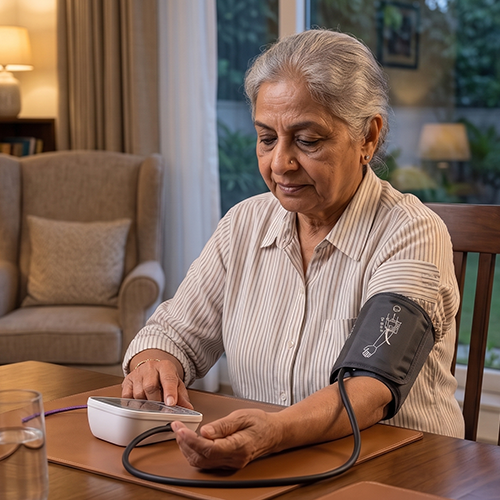
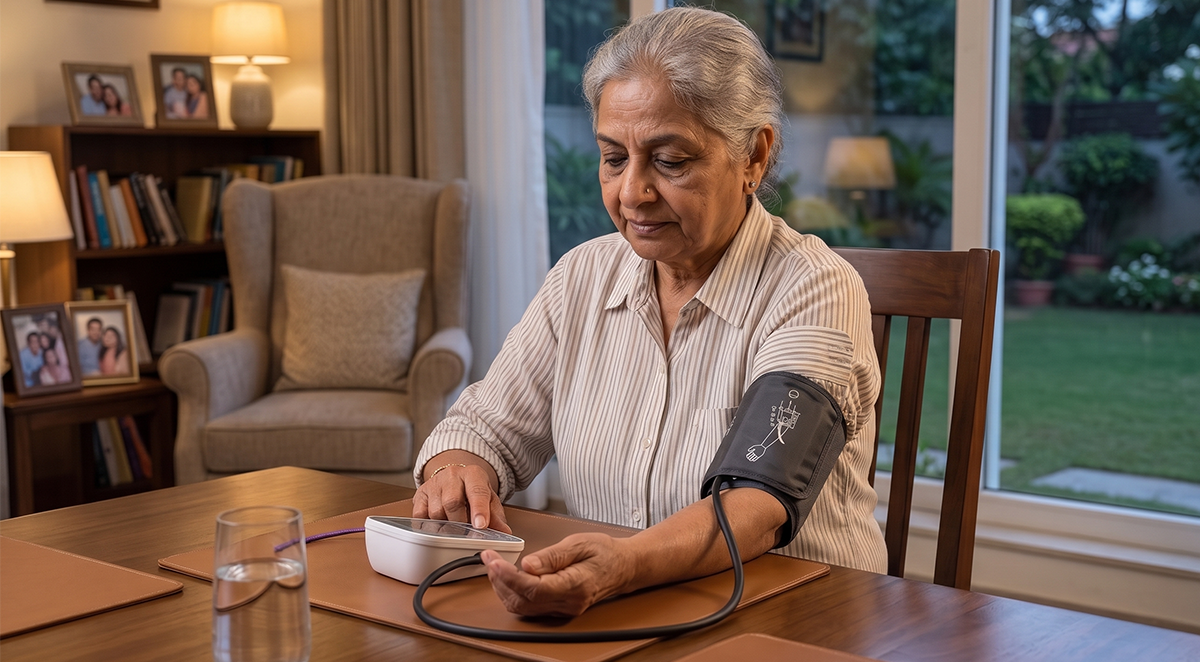
At your house and your parents’ place, there is most likely a similar conversation.
“The doctor said you need to monitor your blood pressure at home.”
“Yes, yes, we will buy a monitor.”
And then… life happens. The monitor is never purchased or purchased and never taken out of the box, allowing it to fulfill its intended purpose.
If this feels familiar, you are not alone.
In the Asia HBPM Survey 2020, which included 832 physicians from India and was published in the Journal of Hypertension (2023), 95.9% of physicians across the participating Asian countries reported recommending home blood pressure monitoring (HBPM) to hypertensive patients. However, physicians also reported that fewer than half of their patients measured blood pressure at home. The authors noted that HBPM instructions were often lacking or not well aligned with local guidelines, which may contribute to the gap between recommendations and patient practice.
So, patients are not careless. They are being uninformed.
This guide is intended to bring some information.
We'll explain what makes a BP monitor accurate and why the numbers reported by your home monitor differ from those reported by your doctor's office.
Why Home Monitoring Matters More Than You Realize
This may surprise you: The BP reading your doctor takes during an appointment may not even be a close representation of what your BP is.
Consider all the things that happen leading up to reading. You probably hurried to get to the clinic on time, then had to wait in line. You may even be anxious about what the number will be. All of this can raise your BP. In fact, it is so common that it has its own name: white-coat hypertension.
The consequence of this is that some patients look hypertensive in the clinic, while their readings are normal in an at-home setting. Without home monitoring, these patients may be prescribed medication that they don’t even need.
But there is something else that worries cardiologists even more than this.
An example of hypertension where symptoms are benign is known as masked hypertension. Some cases involve elevated blood pressure at home, but normal readings during clinic visits. Without symptoms and normal readings in the clinic, there is no reason to seek treatment, and no treatment is prescribed. Masked hypertension is problematic because it is easy to overlook and is associated with a worsening of cardiovascular disease. The only way to detect it is through blood pressure readings taken at home.
Blood pressure does not remain at a constant level throughout the day and can be spiked during the early morning hours before a clinic visit. The early morning spike is a predictor of cardiovascular disease and can only be detected through a home blood pressure monitor.
What the evidence says: Multiple major clinical guidelines including the American College of Cardiology, the European Hypertension Society, the IGH-IV guidelines in India, and the Health Ministry of India, all prescribe using a home blood pressure monitor as the gold standard for the diagnosis of hypertension and for assessing the effectiveness of the prescribed treatments, as opposed to blood pressure readings taken in a clinic.
Indian families are not immune to the effects of this condition. The NFHS-6 data released in May 2026 estimated that nearly 22.1% of men and 19.4% of women 15 years and older in India have been diagnosed with hypertension. In urban settings, this increases to 26.2% and 23.5% respectively.
Hypertension is often asymptomatic which is why it's been nicknamed the "silent killer". There are often subtle signs the body is trying to communicate, which is why the introduction of the home monitor allows users to detect the signs of hypertension in its early stages so that they can take action to treat it.
True Accuracy of a BP Monitor
Take out your phone and search for blood pressure monitors. You will come across a wide range of prices, from Rs.600 to Rs.8,000, with the word "clinical" in the description of at least half of the monitors.
However, the sad reality is that the majority of these monitors have not been assessed for their accuracy. With blood pressure, it's especially dangerous because a reading that is off by even 10 mmHg can lead to an inappropriate decision regarding medication, reassurance, or an important warning sign being overlooked.
So, before we discuss specific products, we need to talk about what to actually look for. These are the essentials. These are the things that actually determine whether a monitor is worth having at all.
Importance of Clinical Validation for Monitors
A clinically validated BP monitor has been tested against medical-grade monitors and has been confirmed to produce readings within 3 mmHg. That is a small margin, but it is important.
The benchmark is the AAMI/ESH/ISO 81060-2:2018 Universal Standard. This was developed collaboratively by the Association for the Advancement of Medical.
Instrumentation, the European Society of Hypertension, and the International Standards Organization. If a device has been validated against this standard, you can trust the readings it provides. If it has not been validated against this standard, you cannot trust the readings it provides, irrespective of claims on the device's packaging.
The positive news is that it is easy to check this out. Two independent registries maintain lists of validated devices: validatebp.org (managed by the American Heart Association and the American Medical Association) and stridebp.org (managed by the European Society of Hypertension). These registries are widely used by hypertension experts worldwide, including in countries such as India where no dedicated public validation registry currently exists. If a device is not listed on either registry, it is generally best to choose a different model.
Upper Arm (The Preferred Choice)
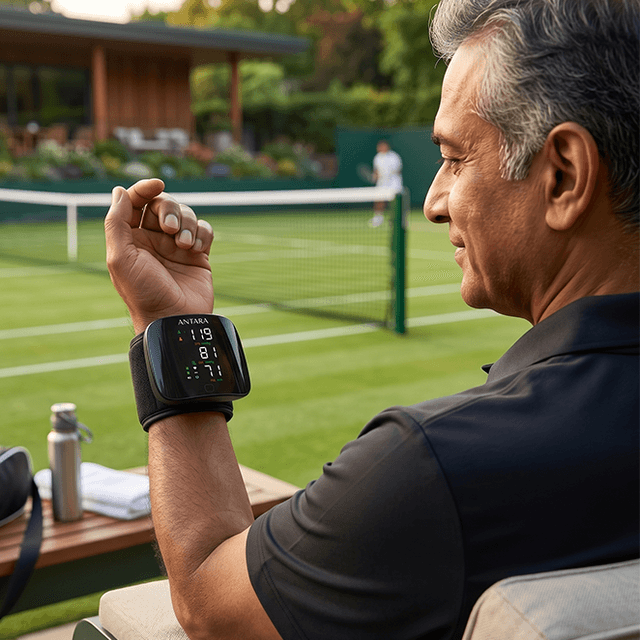
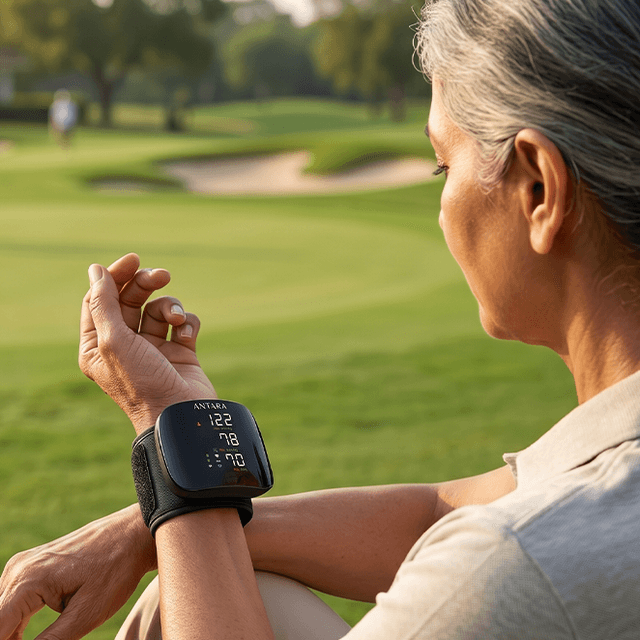
Based on the American Heart Association's guidelines, there is no argument against using a wrist monitor for home blood pressure monitoring. The reasoning is based on physics and is quite simple. Wrist monitors are very positional. Raise your wrist a few centimeters higher or even lower than your heart, and the reading can shift 10 to 15 mmHg. This is not a measurement of variation. This is the difference between normal and hypertension reading.
Cuff Size (The Hidden Issue)
Uncomfortable cuffs might be the most common reason for erroneous self BP readings, yet this issue remains unaddressed.
Cuff size is of utmost importance. The entire system is built upon this. In the case of ill-fitting cuff, every reading that is displayed is not only inaccurate, but completely meaningless.
Regular cuffs can accommodate arm sizes ranging from 22-32 cm. Cuffs which are designed for extra larges extend this to 42 cm. Many older individuals, especially from the diabetic community, will fall beyond this range. A cuff that is too small will give readings that are erroneously too high, and vice versa for a cuff that is too large. It is essential that you measure your arms before making a purchase. It only takes a few seconds.
Understanding AFib: Before You Dismiss this
Probably the most valuable feature of self-monitoring devices is flagging AFib.
AFib is the most common of cardiac arrhythmias and increases the risk of having a stroke. The greatest concern is that many patients have no idea they are at risk. This condition can easily remain undetected for many years as it is only displayed during random clinic visits when it occurs.
A home monitor that detects AFib isn't diagnosing you. That's important to distinguish. It is raising a flag to say, "something irregular was detected; alert your physician." It functions as an early warning system. Since many people will use this monitor on a daily basis, it is capable of detecting things that may be missed during the quarterly check-ups. For seniors with some history of serious heart problems, this flag is important to have.
Something that most people are not aware of: The home numbers that cause concern are different when compared with the numbers assessed in the hospital. For home settings, the threshold is not the commonly said 140/90 mmHg, rather it is 135/85 mmHg. This is very important to know. For example, a reading of 138/87 at home is not borderline. It is, in fact, above the home threshold and should definitely be reported to your physician. The Asia HBPM survey indicated that only 15.1% of Indian doctors treat this difference as important. Therefore, if your physician has not mentioned this, it should definitely be discussed.
Monitor salesmen will tell you that the right monitor is what you need. You know that's false. The actual right monitor is the one sold in accordance with the directions you just so happen to ignore, and this is where most people get it wrong and don't even know it.
The Protocol That Works
Follow these rules before measuring:
- No caffeine, no cigarettes, no exercise, for 30 minutes prior. These things will cause a reading that does not reflect your actual baseline.
- 5 minutes prior, it's best if you sit and do nothing. This is not an instruction for you to do nothing for 5 minutes for no reason. It's very important that you follow these instructions. If you don't, you could get a very high reading at home, which is why most home readings are very high.
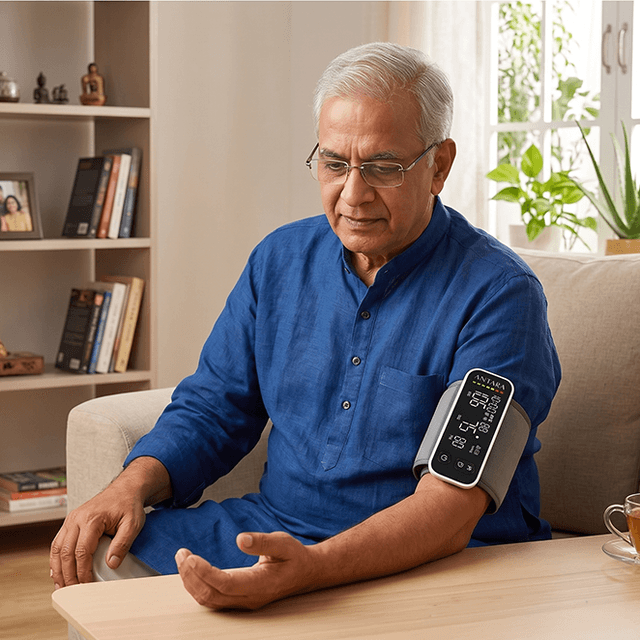
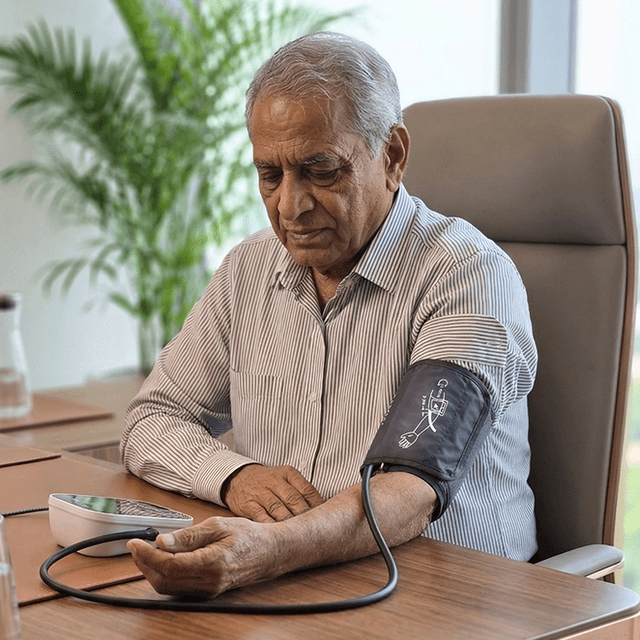
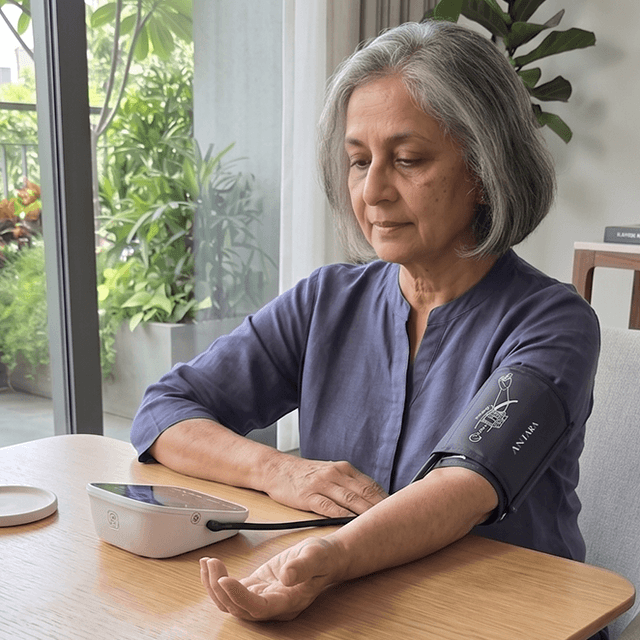
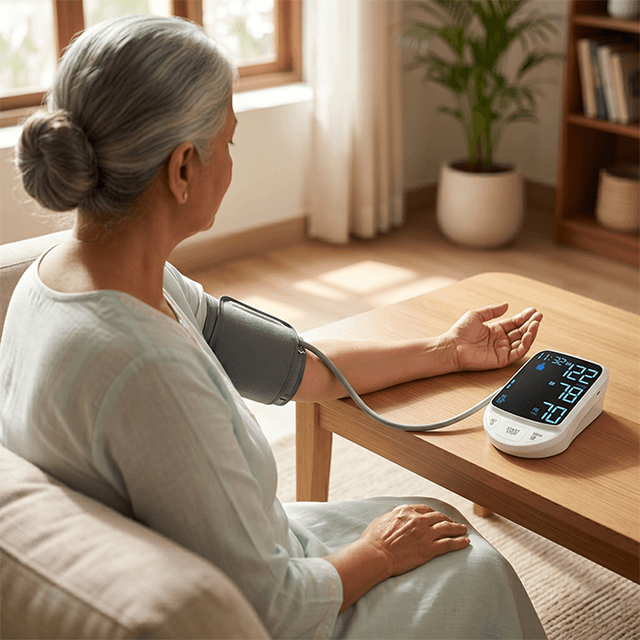
- When it's time to measure, do the following. Back completely supported against a chair. Feet flat on the floor and not crossed. Arm resting at heart level on a table or armrest. Cuff on the bare upper arm (not over sleeve). The marker arrow aligned with the inner forearm.
Going through the process:
- When measuring, make sure you take two readings, one minute apart. Record both. Your doctor wants the average of both readings.
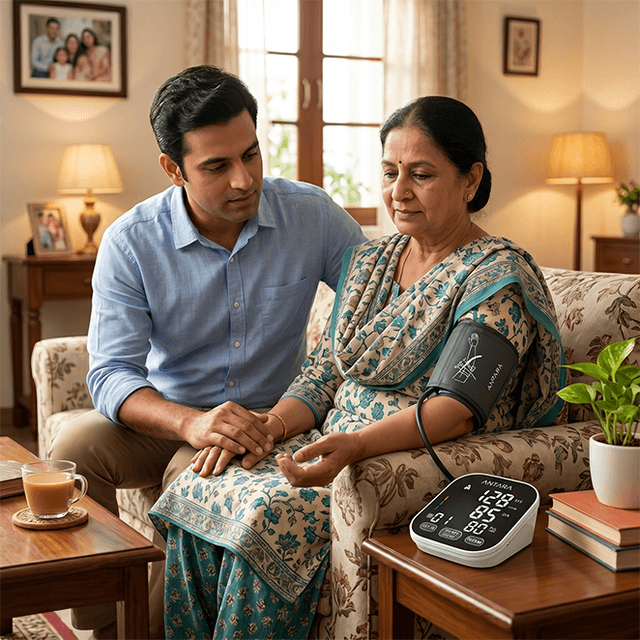
- For home monitoring, the prescription is to take readings at the same time every day. Most say before medication in the morning.
One of the most important rules: before talking to your doctor, do not adjust your medication based on home readings. This is very clearly stated by the European Society of Hypertension. Home monitoring is for record keeping of your symptoms, and discussing this record with your doctor is very important, but what you do with the information is up to the doctor.
This is important and very few people mention it this way: the number that should worry you at home is lower than the number that worries your doctor.
The home hypertension threshold (for now, and it may likely change) is 135/85mmHg.In the clinic, it is 140/90 mmHg. A home reading of 138/87 is not borderline. It is above the threshold and you should speak to your doctor about it.
Only 15.1% of Indian physicians surveyed in the Asia HBPM Survey knew the home BP threshold. So, if your doctor has never specifically mentioned 135/85 to you, it is very likely they have presumed you know, and you probably didn’t, until now.
The Gap That Is Worth Closing
Most patients don’t choose to ignore physician recommendations. Instead, they receive instructions that are incomplete, arrive at the pharmacy without an order, or buy a device and use it incorrectly because they have no guidance to explain what the difference is between a home threshold and a clinic threshold.
A recent multicentric study published in November 2024, focusing on 2,588 hypertensive patients in North India, showed that only 18.1% of participants practiced home monitoring. The researchers identified one typical reason for these concerning statistics. The recommendations given to patients by their physicians were either incomplete or inconsistent with the clinical guidelines.
This gap is not a result of apathy; it is a result of lack of information.
The real concern is not if home BP monitoring is effective. That concern is settled. The real concern lies in the space between knowing home BP monitoring should be done and having the instructions to do it correctly.
The instructions to do it correctly are now in your control.
The easy part is recording your blood pressure levels with this device. The same time each day and trending the numbers to increase the value of your conversation with your doctor.
Most important health decisions are not made in hospitals. They are made at home on another ordinary, quiet morning, before the day begins.
Recommended Blogs





Article by:

Admin
Article Category:
BP Monitors & Other Devices