


Struggling to Get Up From the Toilet? Here's Why, and What Helps
Article by: Shivam
Jul 11, 2026. 8 min read
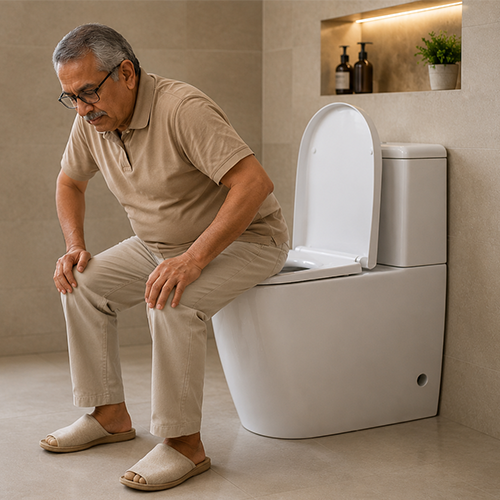
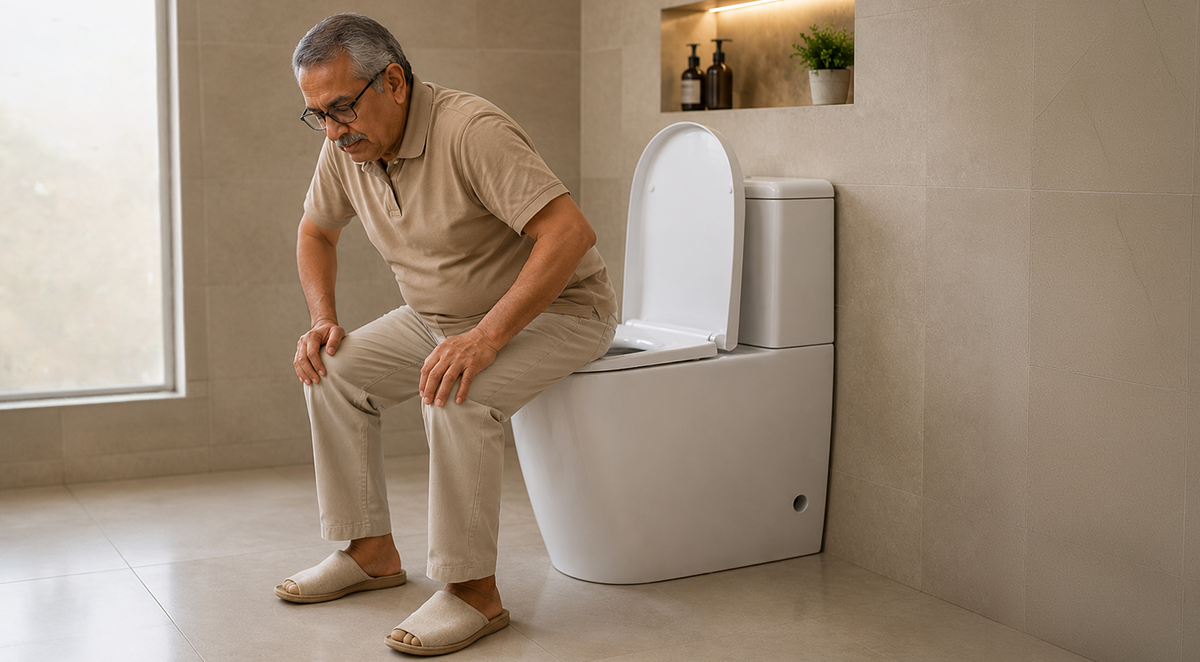
Your parents probably aren't going to say they are having trouble going to the toilet. They will take longer, take more time, and sit in silence more. Then, one day, maybe you start to see them push themselves up with both hands, or they start to avoid the bathroom unless absolutely necessary.
We often assume this is a normal part of aging. But, it isn't.
Look for parents who rock back and forth before standing, use both hands to grab the toilet seat or the wall next to them, seem to struggle with the decision to sit, or seem nervous when using a bathroom that isn't their usual one. These are not normal signs of aging. Everyday routines are becoming more and more difficult, and this means a loss of autonomy is approaching.
If this issue is not addressed, the chances of your parent experiencing a fall increase. They may start to restrict their fluid intake to avoid using the bathroom, lose the ability to go out for extended periods of time without feeling anxious, and start requiring assistance with tasks they once did independently, which is likely going to be frustrating for everyone involved.
By understanding the problem, you enable them to use the toilet in a way that is safe and that saves their knees and hips from added stress, maintaining their dignity, and being as independent for as long as possible.
This guide outlines the reasons geriatric patients struggle to raise themselves off the toilet, which medical conditions often accompany this problem, and the significant number of adjustments, including a few exercises and some supportive devices, that aid to make this essential daily activity much safer and easier.
Why Getting Up From the Toilet Gets Harder With Age
Getting up from a low seat is demanding on the body. The knees, hips, and ankles have to exert sufficient effort to fight off gravity, while the other muscles kind of engage their core to assist in lifting the body. At the same time, the body's balancing system has to make subtle corrections to avoid wobbling. Each piece of this system is negatively impacted by aging.
Starting in our 30s going forward, there are periods of steady decline in muscle mass that accelerates after turning 60. Weaker muscles in the thighs and hips mean little exertable effort to push the body upwards. Joints lose more of their cartilage, which causes smoother movement to turn to friction, pain, or grinding. This is similar to the phenomenon where older individuals lose the ability to control their balance as effectively as they could.
Most toilets have a seat height of 15-17 inches, which is lower than most standard chairs. This makes the effort of standing up from a seated position harder.
Health Conditions That Make Standing Up Difficult
Many of the conditions that are common turn what should be easy, into an exceedingly difficult task.
- Osteoarthritis in the hip or knee joints results in pain and stiffness that is exacerbated with deep bends. Many parents with arthritis tend to avoid low chairs altogether, as this movement can cause intense pain.
- Seated muscle weakness may be linked to decreased activity or a process referred to as sarcopenia, and can impact your ability to perform a sitting to standing maneuver. Even parents who consider themselves to be healthy can experience leg muscle weakness after a number of years where standing may become noticeably difficult without assistance.
- Postural reflexes and vestibular system pathologies put individuals at risk of experiencing unsteadiness while in motion, and this can lead them to overcorrect by grasping a chair or wall.
- Conditions affecting the nervous system such as Parkinson's disease and post-stroke sequelae slow the initiation of movements and worsen coordination. Therefore, the ability to alternate from a seated to standing position becomes more complicated.
- Recent surgeries, particularly hip or knee replacement, impose temporary restrictions on the amount of weight a given joint can support as well as the range of motion of that joint.
If your parent is experiencing a sudden or acute change in their condition that is causing increased difficulty with a task, this should be evaluated by a physician. This change may be indicative of an underlying pathology that is not related to aging.
Practical Exercises That Build Strength for Standing
Practical exercises focused on developing strength to stand are important to focus on as they directly improve standing ability. These exercises should be simple to perform and can be done in the home environment without any specialized equipment.
- Completing sit to stand transitions repetitively from a firm chair targets the same muscle groups that are used to perform rises from the toilet. Arm rests on the chair may provide stabilization during the transitions to support an individual until they are able to perform multiple repetitions of this activity several times a day.
- Wall sits are useful for building endurance, particularly in the thighs. Another way to train these same muscles (without straining the joints) is to stand with your back up against the wall and bend your knees just a bit before holding the position.
- Step ups are also useful for building strength at the hips and knees. Additionally, for anyone who remains seated for long periods of time, ankle pumps and marching in place can help to improve circulation and coordination.
Only a physiotherapist can help with these particular exercises, taking into account your parent's specific joint issues, particularly after surgery or if arthritis is involved.
Increased Safety and Independence for Parents
The bathroom will likely need some modifications, in addition to the exercises that need to be done to build strength. Simple modifications can also be made to the bathroom to lessen the height and effort required to stand up from a seated position.
Adding a raised toilet seat to an existing toilet will reduce the distance your parent has to push down when standing from it. The AGEasy Commode Seat Raiser is a simple solution to a low toilet. It's also a great option for those suffering from knee or joint pain because it can be really beneficial by easing pressure on those areas.
For parents who need side support as well as height, a toilet safety frame fits around the existing toilet and gives both hands something sturdy to push against. This kind of frame turns an unstable, one-handed grip on the seat into a stable, two-handed push, which meaningfully lowers fall risk.
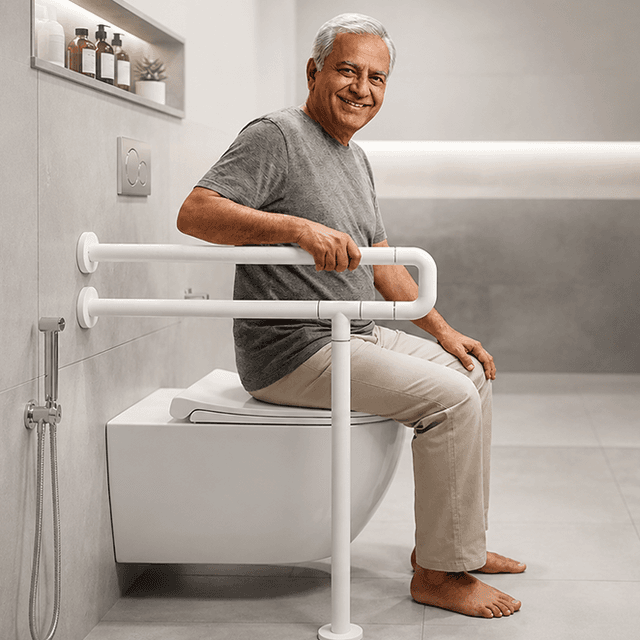
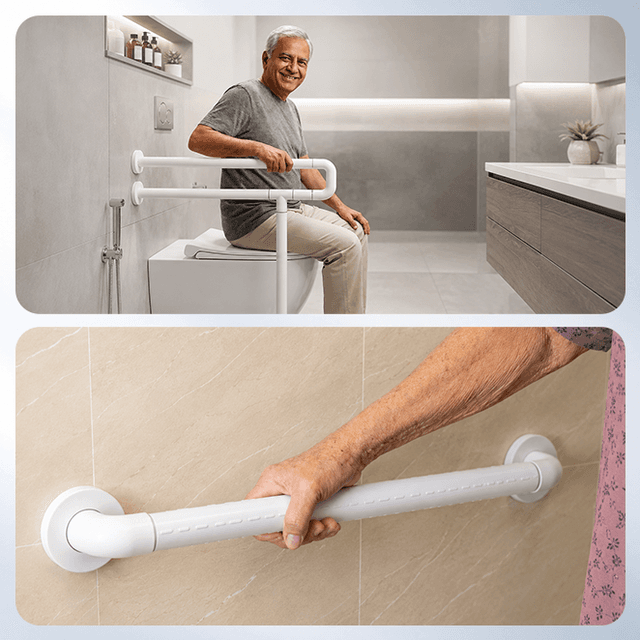
Grab bars installed by toilets allow for people to hold on to something as they sit or stand. Unlike towel racks or sink counters, grab bars are installed to take the full weight of someone.
For parents who have difficulty moving outside of the bathroom, a supportive walking stick, like the Easy Single Leg Walking Stick, can make it easier to get to the bathroom and back, especially at night and in a dark or unfamiliar area.
Knee pain can make it difficult to bend or stand, which is where a knee brace might be of use to you, as it can keep your knees supported and can help diminish your pain. Repetitive actions such as sitting and standing can be difficult, and some seniors find that helping themselves with their joint support by using the AGEasy knee caps to get that support and find it helpful, along with the AGEasy Pain Relief Gel that absorbs quickly, can help take away that stiffness prior to doing a difficult action.
When to See a Doctor or Physiotherapist
There are many adjustments that can be made within the home to make everyday life easier and these are usually sufficient to make life easier, but there are times when an outside professional is needed. If there is a sudden change in someone's ability to maintain their balance, there is a new pain that is noticeable, a joint is swelling, or a person falls in the bathroom, all of these situations should lead to a person contacting a physician. A physiotherapist is able to assess specific movement patterns to devise appropriate exercise plans for parents, along with the appropriate aids to support the exercises.
Assisting Your Parent to Maintain Their Independence
When a parent has difficulty getting off the toilet, it is more than just a mobility issue. They have to cope with fear, embarrassment, and a loss of control over their own body and the most intimate aspects of their daily routine. Tackling the problem promptly, using appropriate support aids, and making home adaptations ensures their safety, and protects their dignity.
The earlier issues are dealt with, the less likely parents are to have falls that result in a loss of their independence. Look out for signs of struggle and talk to your parent as early as possible to make the modifications that help them regain autonomy and manage the task safely.
If your parent has had a recent, sudden change in mobility, or if it is accompanied by pain or swelling, do not just attribute it to the aging process. Encourage them to see a doctor.
Recommended Blogs

You May Also Like
 No products found
Article by:

Shivam
Article Category:
Bathroom Safety