


Post-Surgery Sleep: How to Actually Rest While Healing
Article by: Prateek
Jul 10, 2026. 7 min read

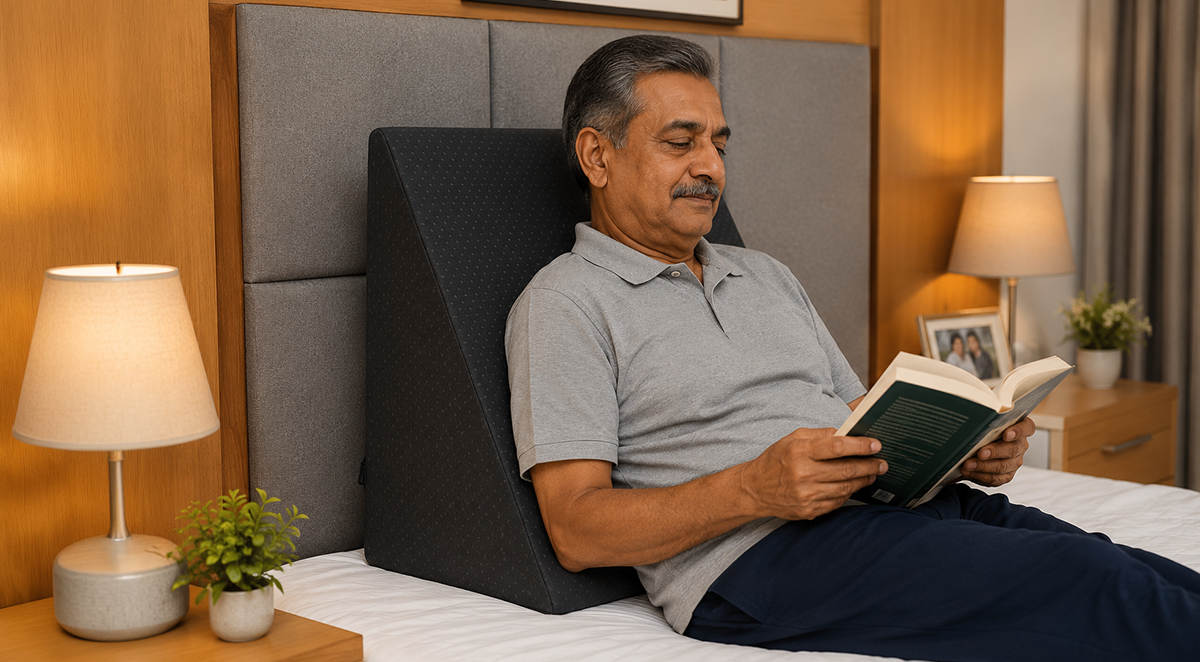
Recovery is not just a question of suffering. Trying to fall asleep can be just as challenging.
After any surgery, we always hear, "You can go home, but you have to rest!" What family members often don't realize is just how challenging it can be. Your parent can't ever seem to get comfortable, every movement is painful, and a full night's sleep becomes a distant dream.
Too many people think that things will naturally get better after the surgery is over. Not everyone is so lucky.
Ignoring the parent who tosses and turns every night, the chair-bound spouse who doesn't get any sleep, the person who is so worn out during the day that they fear any activity that might cause pain. These nights can be much more than frustrating. They can significantly delay recovery. Healing doesn't just happen in the operating room. It also happens while you are sleeping, and your body is repairing itself.
Sleep deprivation can lead to an increase in daytime pain, an increase in the difficulty of rehab, and a decrease in the rate of recovery as well as an increase in the depression that accompanies losing the ability to function normally.
Improvements in sleep can also make improvements to recovery by providing a more supportive environment for the body's natural healing process, providing increased energy for rehab and daily tasks, and enhancing the ability to function independently.
This guide will help you understand what makes sleep so difficult during the healing process, and how your parent can rest well during the process of healing through the use of a few minor adjustments.
Why Sleep Becomes More Difficult After Surgery
Recovering from surgery impacts sleep in multiple ways. It can feel uncomfortable to lie in a position for long periods of time (i.e. due to swelling and stiffness), so patients often have to find new ways to lay down. After hip or knee surgery, for example, patients may not be able to move or roll over, as they had in the past. Spine surgery patients must lay straight and can no longer use many of the sleeping positions that were once available to them. Pain medications also affect sleep, since a person can be woken from deep sleep if a medication wears off during a sleep cycle and an individual is due for another dose.
Beyond the physical aspects of recovery, there can also be a mental impact on sleep as well. Parents often worry about not moving the wrong way during recovery and this anxiety about the possibility of doing something wrong creates a lot of muscle tension, which can make it difficult to fall asleep.
Surgical Recovery and the Best Positions for Sleep
The best position will depend on the surgery that was performed.
Following knee replacement surgery, the leg should be kept slightly elevated and a pillow should not be placed directly behind the knee, since this would impact movement once healing has progressed. A wedge pillow is best for keeping the leg elevated without straining the hip or lower back.
For hip surgery, it is typically safest to sleep on the back, and a pillow can be placed between the knees if the surgeon permits side sleeping during recovery. Legs should not be crossed at all for the first few weeks after surgery.
After spine surgery, it is essential to maintain a neutral position for your back. Remaining supine while having knee support will help decrease pressure from the lower spine. Also, keeping knees apart by a pillow while sleeping on the side, will help to maintain hip alignment to the shoulders.
Following surgery to the abdomen, a position that is a bit more than horizontal will decrease pressure on the stitch line and will help to ease the strain from the effort of breathing or coughing. For this purpose, a bed wedge pillow is useful, as it provides an elevation of the upper body without the need to stack three or four individual pillows, which lose their shape overnight.
An AGEasy Wedge Pillow is appropriate for use in all those situations because it maintains its shape and provides consistent, uniform elevation. Importantly, it won't shift or flatten during the night, as will stacked pillows. This is especially important during periods where your parent may not be able to make those adjustments herself.
Supporting the Spine and Neck During Recovery
Even when the surgery has not been directly on the back or neck, sleep posture that is poorly aligned with the spine adds one more layer of stress to a body system that is already heavily loaded by the healing processes. The neck is bent in an awkward position for an extended period, which will lead to stiffness in the shoulders and upper back. The level of stiffness makes the initiation of physiotherapy for the day so much more of a challenge.
The use of a cervical pillow that retains the natural curve of the neck minimizes this risk. The AGEasy Cervical Pillow is made with memory foam which contours to the neck and keeps the head in alignment with the spine, no matter whether your parent sleeps on their back or side. Such support is especially critical during the recovery phase, as the healing postural modifications cannot be compensated for by the body.
The lower back support needs also to be addressed when your parent is sitting up to eat, read, or rest in between physiotherapy sessions. Significant periods of sitting without adequate back support can negate the benefits of a good night's sleep. The AGEasy Lumbar Back Support is designed to keep the spine in its natural curve by filling the gap between the lower back and the chair and thereby reducing the hold support on the back created through sitting.
Incremental Changes That Matter
Room and routine changes, along with the right pillow, can make sleep naturally more restorative.
A cooler, darker room will promote deeper sleep stages. Even if hospital visits or physiotherapy appointments break the day's schedule, maintaining a consistent bedtime is important. To minimize nighttime trips to the bathroom which can be painful or difficult to get up, avoiding drinking fluids for the last couple of hours before bedtime is advised.
Due to how gaps in pain management can lead to issues that may seem random or unpredictable to your parent, consider implementing an evening schedule for pain medication instead of a strictly daytime schedule. Ask your doctor if any variants can be prescribed to cover the gaps during your parent's sleep period.
Pre-emptively prepare the bed before your parent's arrival instead of waiting for them to request it. Setting up pillows and other supports within their reach means that they will not have to call for assistance to make adjustments. A small table set alongside them containing a cup of water, any medication, and phone can also assist to minimize unnecessary movements during the night.
Being forced to sleep in a chair suggests that your parent finds their bed difficult to get in and out of. Ease of access to the bed may be hindered by inadequate leg height, or the lack of a sturdy hand hold to facilitate standing. The issue can often be resolved without any significant alteration to the mattress, but rather to the overall configuration.
When to Involve a Doctor or Physiotherapist
Sleep problems can require more than a new pillow or a consistent bedtime routine. If there is more pain, more swelling, or more positioning trouble after a few weeks, these are reasons to follow up with the surgeon or physiotherapist. Complications in sleep can easily lead to further issues, and solving the problem requires more than just a new comfort item.
Recovery happens every night. Your parent's body spends hours every night in rest, and the right sleep setup allows the biggest chance for the body to heal, and it takes one more item off the list to worry about during this challenging time.
Recommended Blogs


You May Also Like
 No products found
Article by:

Prateek
Article Category:
Pain Relief Solutions