




Ayushman Vay Vandana Scheme - Free Rs 5 Lakh Health Cover for Every Indian Over 70
Article by: Admin
Jun 17, 2026. 87 min read
How it Works, and How to Claim It
Here's something that nobody mentions when discussing government health schemes.
The families that benefit the most are usually not the families that need it the most. In reality, they are the families that hear the news first, understand the scheme, and complete the documentation before any family member has to even go to a hospital.
The families that miss out on the health scheme are busy and assume that documentation is being done. They saw the scheme in a rush and thought that it is something for the economically weaker sections of the society, or they just got confused with the documentation and opted out.
If your parent or grandparent is over 70, then this article is for them and for you.
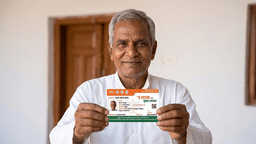
Right now, there is 5 lakh rupees health coverage in a year that is not being claimed, and the only thing that is standing on the way is a half an hour time investment and an Aadhaar Card.
This health scheme is Ayushman Vay Vandana. It requires no proof of income, no Below the Poverty Line (BPL) documentation, and no special documents. The only thing that matters is age. Let's see how it exactly works.
Rs 5 Lakh Annual cover | ~6 Crore Eligible seniors | 36,000+ Empaneled hospitals |
The Way These Things Usually Happen
It is almost never a single dramatic moment.
A father had trouble with his knee for two years. It was painful enough for him to avoid stairs, cease his night walks, and mentally adjust to the pain. One day, he couldn't get up without help. What was once a background inconvenience, became an immediate problem.
A mother's vision was worsening, and while the family knew and spoke of the problem, she began to avoid the daytime as the outside world began to feel changing, unexplainable, and frightening.
There is nothing extraordinary about these stories; they are the same as the hundreds of stories that originate in millions of families around the world. These stories become increasingly burdensome the higher the financial and medical layers become.
These invasive procedures were not planned for and the savings were not meant to fund these expenses. A private hospital will charge between Rs 1.5 lakh and Rs 5 lakh for a cardiac procedure. A knee replacement is Rs 1 to Rs 3 lakh. These include, but are not limited to, cataracts, cancer, and dialysis.
This is exactly the gap the Ayushman Vay Vandana scheme was built to close.
What the Scheme Actually Gives You
Something truly new happened in India's health policy history when the cabinet approved a policy in September 2023. For the first time, an entire age group received universal health coverage.
There were no targeting issues regarding income. There were no restrictions in terms of employment history or social category. Every Indian who is 70 or older is now entitled to free health insurance.
This scheme was launched on 29 October 2024. By March 2026, 3.4 crore seniors had enrolled in the scheme against a baseline of about 6 crore eligible seniors.
This scheme is currently operational in all 36 states and union territories (UTs) of the country. West Bengal was the last to join, in 2026.
This is LIVE. This is not a pilot or a proposal. This is currently operational, and your parents/guardians most likely qualify.
Ayushman Vay Vandana is not a reimbursement scheme where you pay first and claim later. It is cashless health insurance, activated at the hospital counter, with nothing required from you at the point of treatment.
This is what the cover includes:
1) Eligible seniors receive health coverage of Rs 5 lakh each year.
2) Coverage of pre-existing conditions starts on Day 1. No waiting periods.
3) Treatment is available at 36,000 empanelled hospitals.
4) Treatment is cashless and paperless.
5) As of February 2026, there are around 19,483 government hospitals and 16,746 private hospitals.
6) Coverage for about 2,000 procedures across specialities. These specialities include cardiology, oncology, neurosurgery, orthopaedics, nephrology and ophthalmology, among others.
7) Coverage for all costs including medicines, diagnostics, costs incurred before and after the hospital stay as well as the hospital stay.
It is important to know this to clear the confusion for a lot of families.
If your father's household was a beneficiary of the initial PM-JAY scheme, this is not a substitution. This will be an addition. Their household will retain what PM-JAY cover there was, and your father will receive a dedicated Rs 5 lakh in addition.
This means eligible senior citizens in the PM-JAY families will have access to Rs 10 lakh of combined coverage. Senior citizens in households with no prior PM-JAY access will avail the Rs 5 lakh in full. If there are two or more seniors aged 70 and above in a household, the Rs 5 lakh will be shared among them.
Who is Eligible, and the Choice Some Families Must Make
For many families, it's a straightforward answer. Any Indian citizen 70 years and older is eligible.
There is no financial or means of testing. No test to prove you are poor. There is no minimum or maximum requirement for the pension. There are no limits.
This is the first time it is extended to an entire generation in India. It is extended universally. Approximately 6 crores older adults, representing 4.5 crore families, are eligible.
There are two other scenarios that are slightly more complicated. If these apply to you, they're worth knowing:
Central Government/Defense Schemes: If your parent is a member of CGHS or ECHS (central government or defense health schemes), then your parent must make a choice. CGHS and the Ayushman Vay Vandana scheme cannot be combined. This is a big choice and is worth a moment's thought. Which hospitals does your elder utilize? Which treatments are important? Which scheme provides more for that? There is no right or wrong in this.
ESIC Coverage: If your parent is covered by ESIC (Employees State Insurance Corporation), then it is a no-brainer. ESIC members can hold both their ESIC coverage and the Ayushman Vay Vandana scheme. No issue.
For the rest of Indian senior citizens, there is no issue. The card is yours.
The Real Threat to the Independence of Seniors
Life as we know it ultimately becomes unmanageable for many elderly people as a result of certain medical conditions that make independence unachievable. Conditions like having not just cataracts but also painful, arthritic joints and an insufficient heart.
Vision isn't just clarity. Imagine not being able to read medication and then figuring out how to remove a step to cross the road or how to navigate stairs without touching the wall to find your way. Successful cataract removal restores independent living.
Knee and hip pain reorganize your relationship with home and the world outside. Pain creates new challenges, obstacles, and risks. New, self-imposed safety measures gradually deny the world outside. That diminishes dignity for you and your family.
Kidney and heart conditions put a strain on family finances with a high cost of treatment. In the first 17 months of the program, sanctioned claims exceeded Rs 4,200 crore.
This claim is not a statistic just for the government. This number represents families' real medical needs without families paying out of pocket.
Medical bills are one of the most common reasons seniors leave their homes. Not because they want to, and not because no one cares. But because the family cannot afford to keep them there. This scheme changes that arithmetic.
How to Get the Card: Three Simple Ways
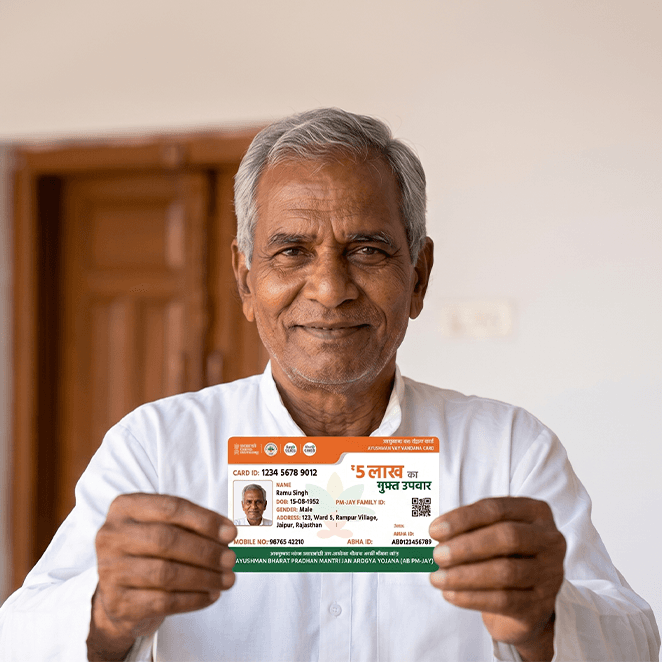
Most families report that they are able to complete the enrollment within an hour. The card arrives usually between 15 and 30 minutes after the enrollment is complete. There is no lengthy process, no line in the government facility, and no paperwork to fill out.
Here are three options. Use whichever is most convenient.
Option 1: The Ayushman App (Most families report that this is the simplest option)
1) Download the Ayushman App from either the Google Play Store or the Apple App Store.
2) Tap the Ayushman Vay Vandana Card from the options.
3) Enter the senior's Aadhaar number.
4) Complete Face Authentication eKYC.
5) No OTP is needed, which is a plus because older mobile devices which may belong to users in this demographic may be unable to deliver the OTP.
6) The card is digitally issued and is ready to be downloaded.
Option 2: Use the Official Website
Go to beneficiary.nha.gov.in
Using Sr. Aadhaar number, complete eKYC
The card is ready to be downloaded once approved
Option 3: Go to a CSC or Hospital (best if tech is a barrier)
Go to the nearest Common Service Centre or the Ayushman Mitra deskin any empanelled hospital
Bring the senior’s Aadhaar card
The staff completes the eKYC and issues the card
One thing that trips up a lot of families: if your parent already holds an original Ayushman Bharat or PM-JAY card, they still need to apply separately for the Ayushman Vay Vandana card. The two are distinct. A fresh eKYC is required even for existing cardholders.
If you run into any issues, the following helplines may be helpful:
14555: General PM-JAY helpline
1800-110-770: Ayushman Vay Vandana specific queries
What Really Happens in the Hospital
This is the part that families have the most questions about. Let's take a moment to clarify this process.
Once your parent is in need of hospital admission, here is what you do:
1) Use the Ayushman App or beneficiary.nha.gov.in to identify empanelled hospitals.
2) There are more than 36,000 hospitals across India.
3) Most districts will have at least one government and one private empanelled hospital.
4) Make the search ahead of time, do not wait until you are in a health crisis.
5) Upon arrival at the hospital, go to either the Ayushman Mitra desk or the billing counter.
6) Present both the Ayushman Vay Vandana card and the Senior's Aadhaar card.
7) The hospital checks eligibility in the system. There is no upfront payment to be made.
8) All treatment under the scheme proceeds.
9) All costs associated with treatment (Ayushman Vay Vandana scheme) including medications, procedures, tests, and the surgeon's fees are covered.
10)Costs for pre-hospitalization and post-discharge follow up visits are also covered, within the defined timeframes of the scheme.
It is also good to know that the scheme covers about 2,000 procedures. If a treatment is not listed or the hospital is not empanelled, you will have to pay out of pocket. For any planned or elective treatment, you will need to confirm both coverage and empanelment of the hospital prior to going. The network is subject to change, so check pmjay.gov.in before going for treatment.
Why This Matters Beyond Just the Costs of Hospital Admission
India is aging, and probably faster than your family is prepared for. By 2046, people over the age of sixty in India will approximately outnumber people under the age of fifteen. By 2050, over twenty percent of the population will be over the age of sixty.
These statistics have real consequences as your family makes real choices on how best to support the parents and grandparents who are living longer than previous generations.
For a long time it has been assumed that elderly people live with their children, that all of their health expenses are covered by the family, and that the family will find a way to make everything work. This assumption no longer holds true as people live longer, and as the health needs of the elderly become even more complex and as siblings are often no longer living in the same city.
By 2046, these assumptions actually become less of an inconvenience, as you are legally guaranteed Rs 5 Lakh a year in health insurance which does not require income documentation, is usable at private hospitals, and has no payment at the time of service. This makes it more likely that the elderly can afford to be independent.
These policies are intended to support the families that need it most. It is most often middle income families in which a Rs 3 lakh hospitalization does not cause a total loss of family savings, but does have serious long term consequences. Ayushman Vay Vandana is meant to prevent a family financial collapse from an unforeseen health crisis.
These are real examples which families ask and want answered as simply as possible:-
My parents have diabetes and a heart condition. Will those be considered pre-existing conditions and covered from day one?
Yes. There are no waiting periods in regard to pre-existing conditions. This is one of the scheme's most vital attributes. It is common for our elderly community to have chronic conditions for many years. The scheme will not place any further penalty on them.
My parents aren't very tech savvy. Will they need to be there to complete the process in person?
Face Authentication will require your parent to be in person for the camera verification. That does not need to occur on a personal device either. A family member can bring a smartphone, or you can visit a Common Service Centre or the Ayushman Mitra desk at an empanelled hospital. Staff will assist you. The process is very simple, even if technology is not your family's strength.
We prefer to use private hospitals. Does the card work there?
Yes. There are over 36,000 empanelled facilities, and more than 16,746 of them are private hospitals, as of February 2026. Most of the major tertiary care centres in most cities are included. Before admission, make sure a specific hospital is empanelled by visiting the official portal, as the network changes frequently.
My parents already have a PM-JAY card. Is there anything they still need to do?
The answer is yes. The Ayushman Vay Vandana card is different from PM-JAY cards; thus, existing PM-JAY cardholders still need to apply for it separately. They also need to do a fresh eKYC. The advantage is that an additional Rs 5 Lakh is available to these cardholders on top of the Rs 5 Lakh allocated to their families under PM-JAY.
My parents are in West Bengal, so is this not applicable to them?
West Bengal was included in 2026. Now it is available in all 36 states and union territories of India. Every eligible senior citizen of India, who is 70 and above, can apply for this from any state.
One Last Thing Before You Move On
There seems to be an interesting pattern in how families perceive and use government health schemes.
The families that are actually able to use the schemes do not seem to be the ones that are the most desperate. They are the ones who knew about the schemes, what was required, and were able to use the scheme before an emergency situation arose.
The families that do not seem to use the scheme are not the ones that are careless. Most of the families were too busy, or thought that the issues would resolve themselves, or did not understand the scheme and somehow prioritized other things deemed to be less busy.
It has been predicted that by March 2026, nearly 3.4 crore senior citizens will have registered under the scheme. Out of an eligible population of 6 crore people, that means that more than 50% of people that can benefit have not used the scheme.
Consider the significance of waiting for cataract surgery. The cataract will not resolve itself. The knee will not fortify itself without intervention. The heart condition will not improve with time.
The procedures this scheme covers are not radical concerns for most families. They exist now or they will. The issue is not with the scheme itself. The issue is whether you'll have time to get it before a hospital visit makes that question obsolete.
It takes thirty minutes and one Aadhaar card. Check pmjay.gov.in for the current list of empanelled hospitals and enrollment figures, as both are updated continuously.
Recommended Blogs
You May Also Like
 No products found
Article by:
Admin
Article Category:
General Wellness