

Oxygen Concentrator at Home: Who Needs One, 5L vs 10L, and the Safety Rules Families Get Wrong
Article by: Vridhi
Article Category: Oxygen Concentrators
Aug 17, 2026
Is a Concentrator Really the First Decision?
Deciding on a concentrator is not your first decision. You have to determine if your parent requires supplemental oxygen in the first place. Most families work this in reverse.
The sequence is usually the same; your parent begins to have breathing difficulties, pulse oximeter readings are in the lower ranges, your family panics, and someone in the family opens the shopping app to search for concentrators. Within the hour, the family is arguing about the 5 liter and 10 liter concentrators.
The machine is the wrong first choice. Price and liter rating (and a neighbor's recommendation) don't tell you what your parent needs. More oxygen is not necessarily better.
Reverse the order.
Ask your parent's doctor 4 things:
- Does your parent have a diagnosed condition requiring supplemental oxygen?
- What is the prescribed flow rate in liters/minute?
- Is the oxygen required all the time, or only during activity or sleep?
- Does a home concentrator work for your parent?
Oxygen is a drug, and like a drug, if the flow rate for oxygen is incorrect, real harm is done. The concentrator or cylinder in your parent's bedroom alters the fire safety for your whole house.
Families who avoid the medical step have parents spending tens of thousands of dollars on equipment they never needed, running a flow rate that nobody checked, and dealing with exacerbating breathlessness instead of getting it checked.
Families who see the doctor first get their parent the therapy that was prescribed, feel confident about the equipment they are now using, purchase the equipment that is needed and keep the rest of the household safe.
This guide looks into the signs that you may need a home oxygen concentration machine, what Home 5L and Home 10L concentrators mean, what you should check before buying, and the safety rules that each caregiver at home must follow.
Who Needs a Home Oxygen Concentrator
Home oxygen prescription is for one reason only and that it is essential to raise the patient's blood oxygen level while the patient is in a resting or in a less active position and while performing activities of normal daily living. Doctors most commonly issue prescriptions for advanced COPD, pulmonary fibrosis and interstitial lung disease, residual tuberculosis and lung damage, heart failure, and pulmonary hypertension, as well as some forms of severe sleep apnea and low-evening readings.
The decision to prescribe home oxygen is not based on a person’s appearance or degree of breathlessness. A decision is based on the results of an arterial blood gas analysis and/or several pulse oximetry readings done after a controlled walking test aided by a health care worker. The general rule for health care workers is to prescribe home oxygen if the resting saturation is at 88% or less or the arterial oxygen pressure (PaO2) is at 55 mmHg or less. Prescriptions for oxygen are coordinated for the patient whose test results are at the edge of the normal range, and they are observed again in a few weeks.
Breathlessness by itself is not enough. Anaemia, anxiety, insufficient training after a long spell of illness, obesity, and irregular heart beats all cause breathlessness as do asthma attacks. There is little to no benefit of high flow oxygen therapy for these conditions and buying a machine is a waste of precious time that your parent could be using for their necessary treatment.
Before You Read the Price Tag
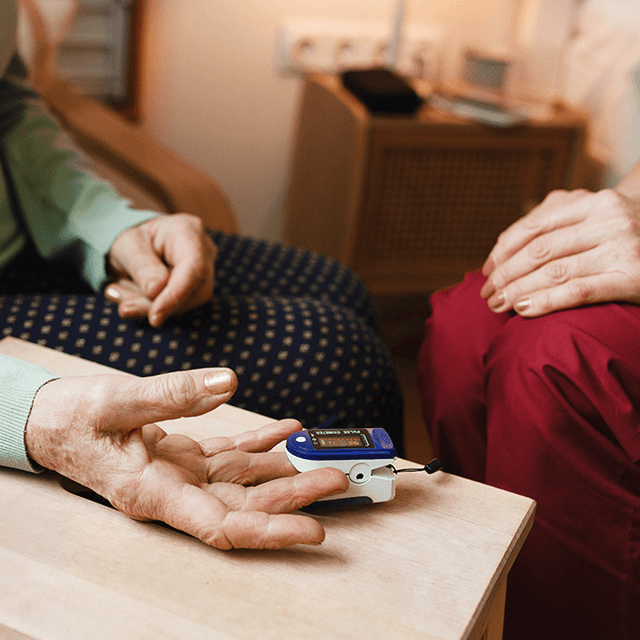
One single low reading is not a big deal. Cold hands can cause slow numbers. Factors such as nail varnish, tremor, mehndi, and poor circulation with a loose grip bring the number down. Warm the hand with a coat or gloves, and rest it on a surface of your choice. With your arm and hand still, wait for a full minute before reading the number. Take readings throughout the day at the same time. Along with the time, write the date, your parent’s state, and the activity.
A history like this will draw more value to a doctor than a single reading freak out. The AGEasy Advanced Sensor Fingertip Pulse Oximeter is a good choice having readings that are steady enough to track a trend.
5L and 10L: What the Litre Rating Means
The litre rating describes the maximum continuous flow in litres per minute. A 5L concentrator delivers a maximum flow of 5 LPM. A 10L unit delivers up to 10 LPM.
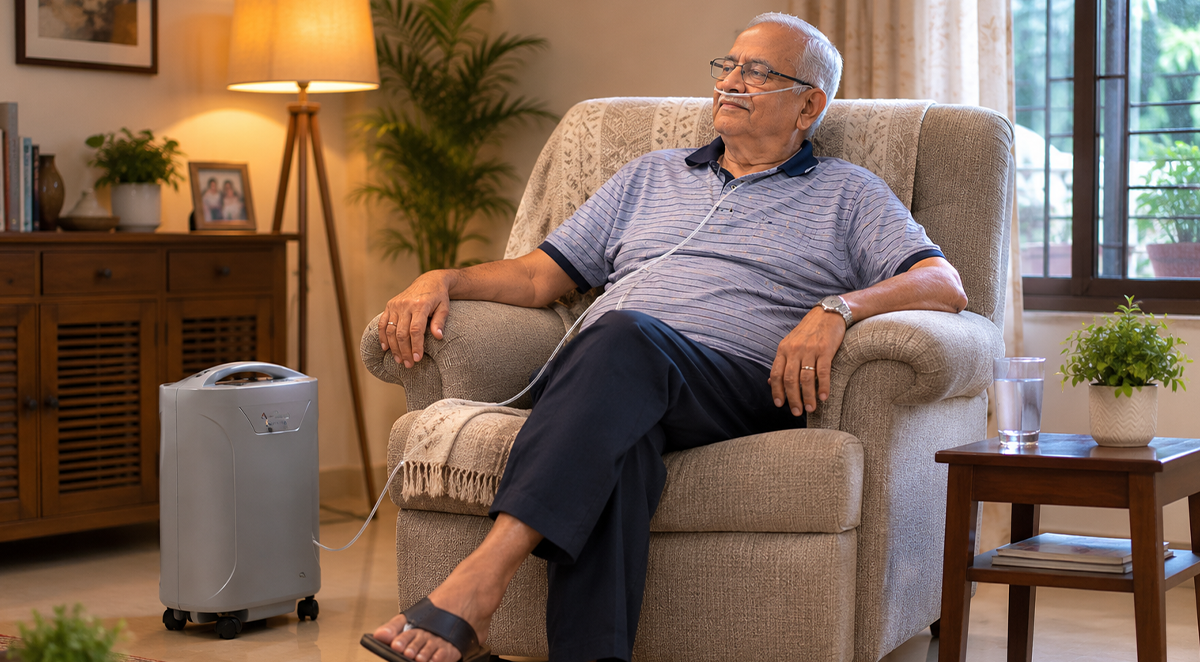
Most patients on home oxygen in India are prescribed between 1 to 3 LPM, which can easily be handled by a 5L machine. The AGEasy Oxygen Concentrator 5L is made for just this purpose. This machine is able to hold an oxygen purity of 93 percent (+/- 3 percent) using pressure swing adsorption so no one in the family has to worry about going to get cylinders refilled. It comes with a humidifier bottle, connecting tube, filter and cannula, has a one year warranty, and a built-in nebulizer, which is important if your parent actually uses inhaled medication. The digital display is easy to use with touch controls, making it convenient for older users.
A 10L unit is made for the even smaller population that is prescribed more than 5 LPM or is in need of support for high flow oxygen at home under supervision. There are definitely trade-offs for having a 10 LPM machine. They are much more expensive to purchase and run, draw even more power, are bulkier, and even louder than 5 LPM machines. You may as well pay the premium for a 5 LPM machine, as there is no other advantage for running a 10 LPM machine for a 2 LPM prescription.
Purity is the biggest draw. A concentrator is able to hold its rated purity only up to its rated flow. If you push a cheaper machine beyond its rated flow, the displayed flow is not a good indicator of the actual concentration of oxygen. It is important to match the concentrator to the prescription in order to ensure that there is no shortage of oxygen. Before every service, have the output tested with an oxygen analyzer.
Continuous Flow, Pulse Dose, and Portables
Home Concentrators provide continuous flow, making them suitable for extended use during the day and at night while sleeping. Portable units run on pulse dose technology. Pulse dose oxygen release bursts when the user inhales, and is designed to be portable and battery powered for travel and activity.
Pulse dose is unsuitable for sleeping due to the unreliability of the inhalation trigger from shallow breathing. For families requiring both stationary and portable units, a continuous flow unit is typically used at home and a pulse dose unit is rented for travel.
What to Check Before You Buy
Make note of the prescribed flow rate and if the prescription specifies the need for oxygen to be supplied continuously, at night, or during exertion, etc. Ensure the unit meets your required specifications and ask about the oxygen concentration alarm and cost.
Consider the noise and ask if the unit has a built in oxygen concentrator. Ask the cost of filters and how long the support contract is. An oxygen concentrator that is not working is more than an inconvenience; it is a medical problem.
The Safety Rules Families Get Wrong
Oxygen is not an ignitable substance on its own. Oxygen accelerates the burning of all around it and even fabrics, hair and skin catch fire from a spark.
Keep the concentrator and tubing two meters away from flames. This includes gas stoves, diyas, agarbattis, candles and hookahs. No one smokes in the house, including guests. Keep the equipment away from heaters and direct sun.
While oxygen is running, use a water-based lubricant instead of petroleum jelly, oil-based balms, or mineral oil on your parent's face, lips, or nose. Avoid aerosol sprays and solvent cleaners in the room while the machine is running.
The intake of the machine should have at least 30 cm of clear space. Keep the machine away from curtains and carpets. Tape the tubing to a wall to avoid creating a fall hazard with long cannula tubing.
Never change the flow rate of the concentrator yourself. Families often think they have to increase the flow rate if their parent is feeling distressed. This is particularly dangerous for people with chronic retention of carbon dioxide, as a high flow rate leads to depression of the respiratory center, and can result in drowsiness and even loss of consciousness. Leave the machine as the doctor set it.
Daily Cleaning
Clean and air-dry the humidifier every day and refill it with distilled or boiled and cooled water rather than tap water. Replace the sponge filter weekly. Replace the nasal cannula every 2-4 weeks or more if there was a respiratory infection. Clean the machine as per the maintenance schedule in the manual.
Indoor air quality is also important. Smoke from cooking, agarbatti, and outdoor pollution combine to add to unhealthy air that further impacts those with difficulty breathing. The AGEasy PM2.5 Monitor helps you understand which hours and which rooms in your house contain the poorest air quality.
When to Concern Yourself With a Call to the Doctor Instead of Turning the Dial
If, after your oxygen is provided as prescribed, your saturation level remains below what your doctor set, you experience worsening shortness of breath at rest, if your parent becomes confused or more difficult to awake, if any part of your parent’s lips or fingertips become bluish, if there is chest pain or a new irregular heartbeat, or if there is a sudden increase of swelling in either of your parent’s ankles, you need to seek medical attention as soon as possible.
While waiting to see the doctor, tools like the AGEasy Premium Peak Flow Meter and a nebulizer from the AGEasy lung health range help you manage your condition, which is the part oxygen alone never fixes.
The right machine is the one that matches the written prescription, is used at the flow rate that the doctor had set, and operates in a safe room that has been made for it. Everything else is shopping.
Disclaimer: This article generally provides tips for caregivers and is not a substitute for medical advice. Oxygen therapy requires a prescription and is to be supervised by a doctor.