
Adult Diapers for Women in India: Complete Guide
Aug 6, 2026


She hasn't told anyone. Not her doctor. Not her daughter. Not her husband. She's been dealing with it herself for who knows how long. Choosing aisle seats at family events. Saying no to long car rides. Declining once favorite events.
Most likely, you are either that daughter noticing the changes, or that woman deciding to finally search for something better.
You are both in the right place.
Here's the truth about women's adult diapers in India. The reality is, everyone gets it wrong the first time. It's not an issue of not trying. It's an issue of packaging and marketing that doesn't explain what is necessary.
It looks simple and helpful on the shelf. It sounds reassuring and clinical. But what happens when you get the wrong fit, or the wrong design, or the wrong style for the type of leakage you're dealing with? It's not comfortable. It's an embarrassing bulge under your sari. It's leaking because the absorption core is misplaced.
In this guide, we breakdown what urinary incontinence is, what to look for, and what to avoid, and why it's important.
This Is Far More Common Than You Think
Urinary incontinence (the involuntary release of urine) is not a rare condition affecting a handful of unfortunate women. In a number of India-centered, peer-reviewed studies, between 20 to 45% of women in India will experience this condition over their lifetime. The prevalence of incontinence spikes dramatically after 40.
20–45% of Indian women experience urinary incontinence; prevalence rises sharply after 40 (multiple peer-reviewed India studies).
In one of the largest hospital-based surveys ever conducted in India, which studied 3,000 women and was published in a Urology international journal, 21.8% of women reported incontinence. A community-based study in North India reported 26.8% of women aged 35 and older experienced urinary incontinence. That same study reported that women over the age of 60 experienced urinary incontinence at rates above 40%.
In the most recent Indian data, the 2026 study published in the Indian Journal of Obstetrics and Gynecology Research from Kerala, urinary incontinence was documented in all the reproductive age groups and was increasingly documented in women after every delivery. These aforementioned studies and surveys indicate that urinary incontinence is a widespread national problem and is not confined to a single region.
Urinary incontinence is common. It is not normal. Common means that there are potentially viable solutions to the problem that a significant number of Indian women are experiencing. The distinction between normal and common is important.
The answer is more obvious than you may think. It's because nobody discusses this situation. Apparently, studies show women avoid seeking support for this issue for an average of 7 years. That is 7 years of doing it on your own. 7 years of making almost undetectable changes to keep things manageable. We intend to make this the year when all of that changes.
Why This Happens: Causes, Simply Explained
There is no need to be a doctor to make sense of what we are going to explain. Causes of urinary incontinence in women are known and identifiable. There are several Indian studies that help assist in providing an understanding of this issue.
Menopause and the Oestrogen
Less oestrogen after menopause. It may look like a hormone issue, but it is a structural issue. Declining oestrogen makes the tissues around the urethra and bladder lose tone, and oestrogen makes those tissues supportive. Imagine a very reliable rubber seal that has served well for decades. It does not fail in a dramatic way. It becomes slightly less responsive and less effective. That is what is occurring. The seal is there, but it is working in a different environment.
Childbirth and Pelvic Floor
Many women cannot connect starting to experience leakage after childbirth that occurred decades ago. However, they are very much related.
Repeated vaginal childbirth places extreme mechanical strain on pelvic floor muscles and nerves. The Kerala study of 2026 showed that additional childbirths exacerbate injuries to pelvic floor nerves.
Some injuries may not become apparent for years. Injuries often become noticeable in a woman's 40s, continue into her 50s, and become more pronounced due to the hormonal changes and the cumulative effects of time, gravity, and menopause.
This is not a failure of your body. This is a medical event that has long term effects, and that no one warned you about.
Hysterectomy
Hysterectomy is the surgical removal of the uterus, and is another risk factor that is consistently observed in multiple Indian studies. It may also alter the bladder's support structure and may also affect the nerves of bladder control. If your mother had a hysterectomy and is experiencing incontinence, then this is a well-established relation, not a chance occurrence.
Other Contributing Factors
BMI above 25, diabetes, asthma, frequent urinary tract infections, and chronic constipation have also been observed as the other contributing factors in the studies. All of these may increase the stress on the pelvic floor system.
THE POSTPARTUM ANGLE: OFTEN MISSED
Urinary incontinence should not only concern older women. The FOGSI recognizes pelvic floor disorders as a postpartum complication of childbirth and as a concern for millions of women in India. These disorders have been neglected during postpartum care.
Women in their 20s and 30s are noticing this currently and are calling it 'normal recovery.' It's not just recovery all the time. If this is you or someone you are helping, see our specialized postpartum incontinence guide. [INTERNAL LINK — see flag]
Not All Leakages Are the Same
Here's one of the most commonly overlooked features in product offerings. Different types of incontinence require different types of products. Selecting the right product can make a meaningful difference.
Stress Incontinence: The Most Common Type
This was the case for 73.8% of women in a study of 3,000 women conducted in an Indian hospital. Leakage associated with stress incontinence occurs as a result of physical pressure such as coughing, sneezing, laughing, picking up, or exerting pressure on the body, or even by standing up briskly.
The term is misleading since it is not associated with emotional stress. In fact, it is pressure of a mechanical nature on the bladder. Due to a lapse of strength in the pelvic floor muscles the pressure causes a leakage that is beyond the capacity of the urethra to retain.
When choosing a product, it's important to keep in mind that stress incontinence is usually characterized by smaller leaks that are sudden. For this reason, the better option is a product that is better fitted and has a core positioned better to absorb the leakage, as opposed to a product that is larger and more bulky.
Urge Incontinence: The Urgent Rush
This type of incontinence is characterized by a strong urge to go to the bathroom that is so sudden and so alarming that you may leak on your way to the bathroom, if you make it at all. Women say it's like someone opened a door before you had a chance to.
This type of incontinence is also associated with an overactive bladder and in this case, it is more serious than stress incontinence. In this case, it is more significant to consider the volume that the product is capable of absorbing as this type of incontinence usually results in a much larger leak.
Mixed Incontinence: Both at Once
In the studied hospital sample, about 16.8% of women presented with both types of incontinence. This means you are likely dealing with small, unpredictable leaks from physical activity, as well as larger, more urgent leaks. The product you choose will need to have the correct fit, both in terms of size and level of absorbency.
Why Most Unisex Adult Diapers Don't Work Well for Women
Surprisingly, this is the part the packaging never explains.
The majority of adult diapers available in India are made to either fit everyone and be unisex, or to be made in one shape to fit all. This appears to be practical. Unfortunately, the reality is more difficult to deal with.
The Anatomy Problem
In women, the urethra opens at the front-center of the body, and leakage first occurs there.
Most unisex adult diapers are made with either a centered or slightly back weighted absorbent core, and are therefore made to tackle male anatomy. That absorbent material, therefore, sits in the wrong placement for a woman's primary leak zone.
This results in leaks from the front, and it is not due to a failure of the diaper, but rather that it was never designed for this particular anatomy.
A diaper designed for women, with either a front weighted or fully centered absorbent core, addresses this problem. For women, the difference between a unisex diaper and a women's specific diaper is usually evident and obvious.
The Fit Problem
Women tend to have hip-to-waist ratios that are wider than men's. This means that the leg openings of unisex adult diapers will leave significant gaps for women, especially at the inner thighs, which can lead to leakage that escapes sideways before the absorbent core gets a chance to engage.
When leg cuffs are designed specifically for women's hip geometry and are snug and contoured, they fill this gap. Therefore, while technically a product may absorb leakage, it is often because the leakage has already escaped to a designated place that it shouldn't have.
The Indian Attire Problem
An adult diaper may bulge and create an outline in the lower abdomen area of a saree because it drapes across the hips, abdomen and waist. A pull-up diaper that is designed to have a slim profile will fit under a saree or churidar unlike a thick, tape-style brief.
A salwar or kurti's waistband rests at the natural waist and a traditional tape-style brief will create a visible ridge, whereas a soft waistband will not.
Cross-legged sitting on the floor is not only still completely socially and culturally acceptable, but also common in many Indian homes, for activities such as prayers and mealtimes including spending time with grandchildren. This posture leads to increased pressure on the leg openings of an adult diaper, meaning that leg seals that are designed poorly will leak in this position. However, leg cuffs that are designed well will maintain their seal in this position.
These are worries that matter. There is a woman that wants to continue going to the morning puja, sitting on the floor with the grandchildren, and wearing her daily saree. For her, the right product helps her continue with life, while the wrong product makes her withdraw from it.
The right product is the one that is completely invisible to the caregiver, the family, and the woman.
What to Actually Look for: The No-Nonsense Checklist
This is the information that matters and the reason why.
| Feature | Why It Matters | What to Check |
|---|---|---|
| Front-weighted or centred absorbent core | Matches female leak zone. Front leakage (that unisex product fails to capture) is eliminated. | Look for "women's fit" or something similar on the packing. |
| Snug elasticated leg cuffs | Side leaks are eliminated and sealing is achieved even during movement and cross-legged sitting. | Should have inner and outer cuff layers. |
| Slim, low-bulk profile | Is concealed under sarees, kurtis, and salwars. | Check across the brands; the slimmer, the better for the active woman. |
| Breathable, skin-safe outer fabric | Incontinence-associated dermatitis is a risk. It affects 35–47% of the elderly population suffering from incontinence. | Outer layers should be non-woven and breathable. |
| Flexible, soft waistband | Seamless under Indian attire. | Should self-fold when pressed against. |
| Pant-style pull-up design | Essential for independent toileting. Preserves dignity for the active woman and is self-use. | For the active woman it is essential, but for the woman who is totally bedridden, tape style is better. |
| Wetness indicator | This is essential for a caregiver managing a parent that cannot self-report a change. | Should be a color changing line that is visible on the outside of the product. |
| Appropriate absorbency | Stress incontinence needs moderate rapid absorption. Mixed or urge incontinence needs higher capacity. | Look for absorbency rating in ml on the package, not just the category label. |
Pant Style or Tape Style? Here's How to Decide
This question is typically answered poorly on product pages. We will answer it directly.
Choose Pant-Style (Pull-Up) If:
- The woman is able to walk, even slowly or with support
- She can stand briefly to change
- She's coping with incontinence independently, without a caregiver for every change
- She cares about discretion with her daily clothing
- She appreciates the ability to use the toilet independently
Pant-style diapers are designed to resemble real underwear. You wear them just like you would with underwear. It may sound like a minor detail, but it's actually a big difference.
You are afforded the privacy and dignity of completely self-care. You are able to maintain the self-care of the condition and keep it private. You are able to keep the routine of using the toilet completely normal and private. For women in this situation, who cope with this condition in silence, self-care and independence is invaluable.
WHEN TAPE-STYLE MAKES MORE SENSE
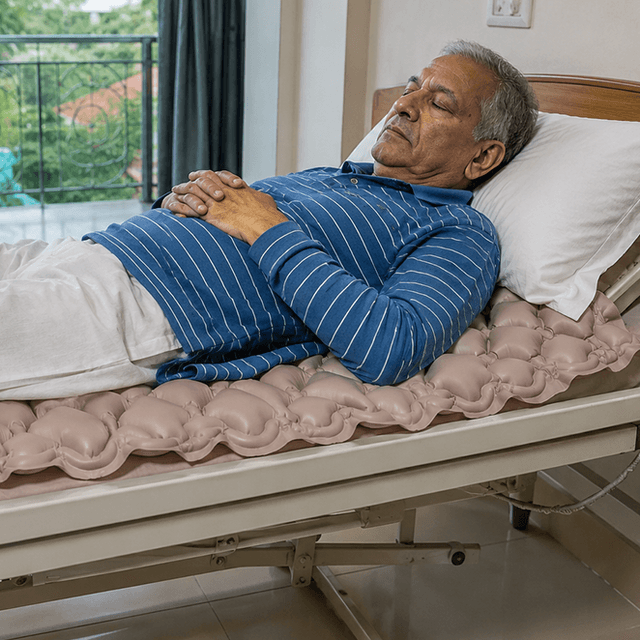
Tape-style adult briefs are appropriate when women are almost fully bedbound with no less than full caregiving support for all aspects of changing.
For this level of dependency, the caregiver is allowed to change the product without the need for the person to stand up or walk.
If your mother is in this situation, tape-style is something to look at. The same criteria are still valid: breathable fabrics, absorbent cores positioned with dignity, and leg cuffs that function. The design will change. The basic principles will not.
Sizing: Where Most People Get It Wrong
This is the number one error in ordering. They size it with a guess. An example would be purchasing an adult diaper in XL because the woman wears the XL kurtis. An XL in clothing and an XL in adult diapers are not related.
Sizing for adult diapers is based solely on the measurement of the waist and the hips. Always, without exception, measure before you buy.
Use a flexible measuring tape. For hip measurement, measure around the largest part of the hips. For waist measurement, measure around the waist or at the top of the hips. Use the greater measurement for size determination.
| Size | Waist (inches) | Hip (inches) | Typical Context |
|---|---|---|---|
| Small (S) | 24" to 32" | Up to 34" | Slim build; early postpartum women |
| Medium (M) | 28" to 38" | 34" to 42" | Average Indian female frame; the most common size |
| Large (L) | 33" to 45" | 40" to 48" | Larger frame; post-menopausal weight changes |
| Extra Large (XL) | 39" to 55" | 46" to 58" | Larger hip circumference; bariatric needs |
Note: size ranges vary between brands. Always check the specific brand's sizing chart before purchasing. For a complete sizing reference, see our adult diaper size chart. [INTERNAL LINK — see flag]
One note: Menopause creates hip shaping and body fat redistributions. A size that was once fitted at 45 may be ill-fitting at 70. Measure each time, rather than assuming based on a product that worked before.
The Skin Question Nobody Raises Until It's Too Late
Skin in adult diapers faces a tough and harsh environment as a result of moisture, warmth, and urine, in combination with friction and prolonged contact. Skin in these areas breaks down more rapidly than anywhere else on the body.
The medical term is incontinence-associated dermatitis (IAD). About 35-47% of elderly patients that are managed continuously for incontinence suffer from this condition. Incontinence-associated dermatitis causes breakdown of the skin resulting in pain, increased risk of infection, and slow healing. It turns a minor problem into a major medical one.
Your product is the first barrier to this problem.
- The top sheet of the product is most likely the first barrier to the problem and is made of a highly breathable layer that allows the passage of air. This helps to control and eliminate heat and moisture.
- The internal surface of the diaper is made of a soft non-woven surface that helps to minimize skin friction.
- The surface also has a moisture-wicking feature that pulls moisture away and keeps it off the skin. This is extremely helpful for the product's intended use of overnight absorption.
- Timely changing: even the best product should not be worn beyond its designed capacity.
For caregivers, if there is any skin breakdown or redness, then the product is absorbing insufficiently, it is a poor fit, or it hasn't been changed frequently enough. This is easily solved with the right absorbency, fit, and frequency of changing.
What This Actually Comes Down To
This isn't about product availability. Most of what is described in this guide is available today and can be ordered. AGEasy offers all 3 in this category -
- Regular Unisex Adult Diaper Pants Style,
- Regular Unisex Adult Diaper Pants Style with Smart Liquid Distribution technology
- Adult Tape Style Diaper
The real problem is millions of Indian women have to manage a condition that should be easy to manage and are doing so in silence. They have to make do with products that do not fit their anatomy, do not accommodate their clothing, and do not accommodate their mobility and activity. It is not due to a lack of better options. It is because no one has educated them on what options are available and what to consider.
The research on prevalence is solid. The anatomy argument is documented. The solution is clear: absorbent core, leg cuffs, slim profile, breathable fabric, elastic waistband, pant style, mobile women.
It is a simple list of things that is somewhat complicated because no one has suggested it. Most of the significant health choices do not happen at a health facility. They happen in a patient's home, on a product page in the daughter's search history, during the lunch break. Making choices on health does not require someone to have a medical background. What is required is the right kind of knowledge.
Quick Reference: What to Remember
- Urinary incontinence affects 20 to 45 percent of Indian women. It is common, not rare. Prevalence rises sharply after 40.
- Stress incontinence is the most common subtype, triggered by coughing, sneezing, laughing, or lifting. It accounts for 73.8 percent of cases in the largest Indian hospital study.
- Key risk factors: age over 40, multiple vaginal deliveries, menopause, hysterectomy, and high BMI.
- Unisex adult diapers often fail women because the absorbent core is placed for male anatomy, and leg openings don't account for female hip geometry.
- For mobile women, pant-style pull-ups are almost always the better choice. They preserve independence and go undetected under Indian clothing.
- For bedridden women requiring caregiver assistance, tape-style briefs are more practical.
- Always measure hip and waist circumference before selecting size. Clothing size is not a guide.
- Prioritise: front-weighted absorbent core, snug leg cuffs, slim profile, breathable fabric, and a flexible waistband.
- Skin health matters. Breathable products and timely changes prevent incontinence-associated dermatitis.
- Products manage the day-to-day. Assessment and treatment can address the underlying cause. Both matter.
Sources and Evidence Base
This article draws on the following peer-reviewed research and institutional sources:
Prevalence data: Indian Journal of Urology / International Journal of Urology (3,000-woman hospital-based survey: 21.8% overall prevalence; stress incontinence 73.8%); Istanbul Medical Journal 2024 (Aggarwal et al. North India community study: 26.8% in women 35+, 40%+ in women 60+; Kumar et al. South India: 24.6%); Indian Journal of Obstetrics and Gynecology Research, Varghese et al., Kerala, May 2026 (most recent India-specific study); IJRCOG (North India menopause-UI study); Dr. Mehta's Hospitals clinical data (50%+ in multipara women).
Global context: PubMed meta-analysis (40%+ prevalence in women aged 70+).
Institutional references: Federation of Obstetric and Gynaecological Societies of India (FOGSI) on postpartum pelvic floor disorders; National Association for Continence, NAFC (seven-year treatment lag).
Skin data: IAD prevalence range (35 to 47%) from published clinical studies on elderly incontinent populations.
Treatment-seeking: 14.4% rural Indian women treatment rate from peer-reviewed India incontinence literature.
Note: the '20 to 45%' range reflects the verified spread across Indian peer-reviewed studies. No single named study supports a precise midpoint figure, and none has been used in this article.